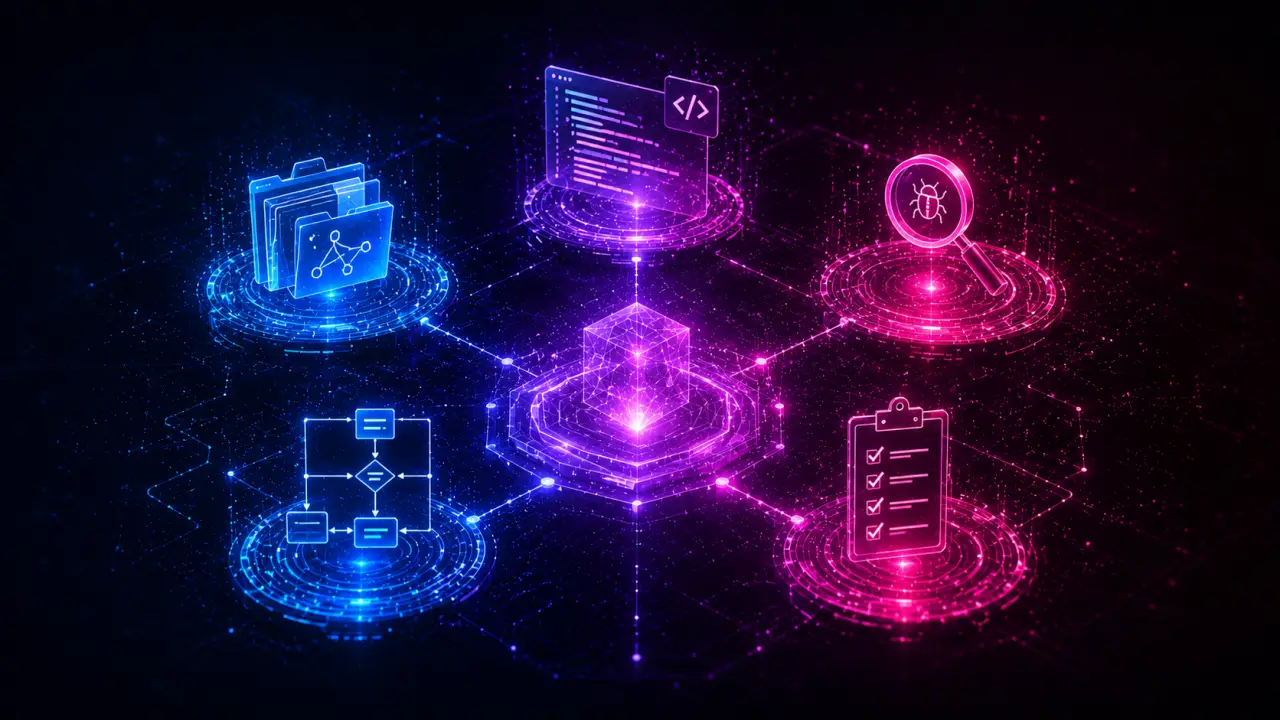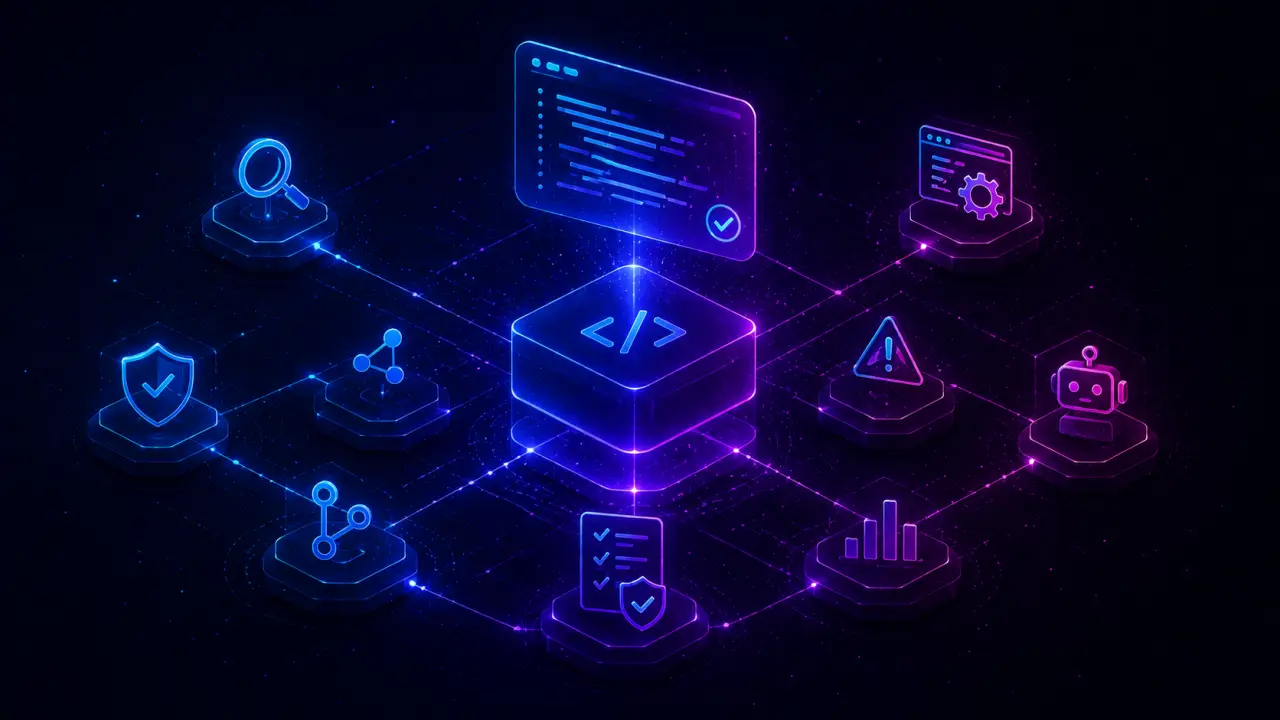
Must-Have Claude Code Skills for 2026: The Complete Collection Every SKILL.md skill worth installing for Claude Code in 2026, organized by workflow. Whether you're looking for a single skill to try or want to build a comprehensive toolkit, start here. Quick Answer: The available skills for Claude Code in 2026 are git-commit-writer, pr-description-writer, changelog-generator, code-reviewer, readme-generator, env-doctor, and migration-auditor, covering version control, code quality, documentation, environment, and database workflows.
Git and Version Control
Managing code changes efficiently is crucial for any developer or team. Git workflows can become tedious with repetitive tasks, and this is where Claude Code’s git-related skills come in handy. They automate the most mundane parts of your workflow while ensuring clarity and precision in your commit history and pull requests. git-commit-writer is the cornerstone skill for commit message automation. It scans your staged changes and automatically crafts conventional commit messages by detecting the type of change (feat, fix, chore), the scope (which module or feature), and even whether there are any breaking changes. This ensures your commit history is both informative and standardized, a massive time saver when preparing releases or debugging. For example, instead of manually writing "Fixed bug in auth module" you get "fix(auth): resolve token expiration bug" — instantly more meaningful. pr-description-writer takes your pull request creation to the next level by generating detailed PR descriptions from branch diffs. It summarizes what changed, why the change was necessary, and what testers should focus on. This skill supports all major platforms — GitHub, GitLab, and Bitbucket — and helps maintain consistency in PR reviews. Imagine pushing a feature branch and instantly getting a well-structured PR description without typing a single word.Practical Steps to Integrate Git Skills
1. Install the git-commit-writer skill through your Claude Code interface. 2. Stage your changes as usual with `git add`. 3. Invoke git-commit-writer to generate the commit message automatically. 4. For pull requests, after pushing your feature branch, run pr-description-writer to produce the PR description. 5. Review and tweak messages if necessary before pushing or opening the PR.This workflow not only saves time but also dramatically improves codebase hygiene.
Tips for Maximizing Git Skill Benefits
- Use conventional commit types consistently to ensure changelog generators work flawlessly. - Combine pr-description-writer with your team’s PR template for even richer documentation. - Run local tests before committing to avoid multiple fixup commits; git-commit-writer will capture the final state.Real-World Use Case
A mid-sized SaaS company integrated these git skills into their CI pipeline. Developers no longer struggled with writing commit messages or PR descriptions. This reduced review times by 30% and helped maintain a clean project history, making audits and releases smoother.Code Quality and Review
Automation can elevate code quality and peer review efficiency. Claude Code’s skills help spot issues early and assist reviewers in giving actionable feedback. code-reviewer is a skill that analyzes code changes and provides a summary of potential issues, style inconsistencies, or areas for improvement. It understands best practices, security concerns, and performance optimizations. By integrating this skill into your pull request workflow, you can catch common mistakes before human review, saving time and improving code health.How to Use code-reviewer Effectively
- Configure it to run on each PR submission automatically. - Review the generated feedback alongside human comments. - Use its suggestions as teaching moments for junior devs.For example, if a developer introduces a nested loop with a costly time complexity, code-reviewer will flag it and suggest alternatives, preventing performance bottlenecks before deployment.
Documentation and Communication
Good documentation is the backbone of maintainable projects. Claude Code offers skills to automate tedious documentation tasks. readme-generator helps you create or update README files based on your project structure, dependencies, and recent changes. It can pull from package manifests, code comments, and changelogs to produce comprehensive documentation. changelog-generator automatically compiles changelogs from commit messages, saving manual effort during release preparations. By leveraging conventional commit messages crafted by git-commit-writer, it produces clean, categorized changelogs that inform users about new features, fixes, and breaking changes.Step-by-Step for Documentation Automation
1. Ensure commits use conventional messages via git-commit-writer. 2. Run changelog-generator before release to compile recent changes. 3. Use readme-generator periodically to sync documentation with codebase updates.This practice keeps your project approachable for new contributors and end-users alike.
Environment and Deployment Safety
Deployments can be risky if environments are misconfigured or incompatible. Claude Code’s environment skills prevent such headaches. env-doctor scans your development and production environments to detect missing dependencies, version mismatches, or configuration errors. It provides actionable reports to fix issues before they cause failures. migration-auditor reviews database migration scripts to identify potential data loss, conflicts, or rollback problems. It’s invaluable for teams managing complex schema changes regularly.Best Practices with Env and Migration Skills
- Run env-doctor as part of your CI/CD pre-deployment checks. - Use migration-auditor to validate migration plans in staging before production rollout. - Combine these skills to automate safety gates, reducing human error.Example Scenario
An e-commerce platform used env-doctor to detect a critical Node.js version mismatch between staging and production, preventing a costly crash during Black Friday. Simultaneously, migration-auditor caught a migration script that would have dropped an important table, allowing the team to revise it safely.Building Your Claude Code Skillset for 2026
By combining these skills, you create a layered, robust workflow that automates the boring parts and enhances the critical moments of software development—from commit to deployment.Recommended Installation Order
1. git-commit-writer 2. pr-description-writer 3. changelog-generator 4. code-reviewer 5. readme-generator 6. env-doctor 7. migration-auditorStart with version control skills to gain quick wins, then layer on quality, documentation, and safety tools as your project scales.
Final Tips
- Regularly update your skills to benefit from improvements and new features. - Customize skill configurations to fit your team’s conventions and workflow. - Encourage team adoption by demonstrating time saved and improved code quality. With this complete collection of Claude Code skills, your 2026 development workflow will be more efficient, reliable, and maintainable. Start installing today and experience the future of automated coding assistance.Frequently Asked Questions
Are these prompts free? Yes — all PromptSpace prompts are free to copy and use. Browse our ChatGPT Prompts library for hundreds more.Do these work on the free tier? Most work on free tiers. Complex prompts may perform better on paid versions (ChatGPT Plus, Claude Pro) with larger context windows.
How do I get better AI results? Be specific: include your role, desired format, target audience, and any constraints. More context always improves output.
Can I modify these prompts for my use case? Absolutely — treat every prompt as a starting template. Customize the role, topic, tone, and format to match your needs.