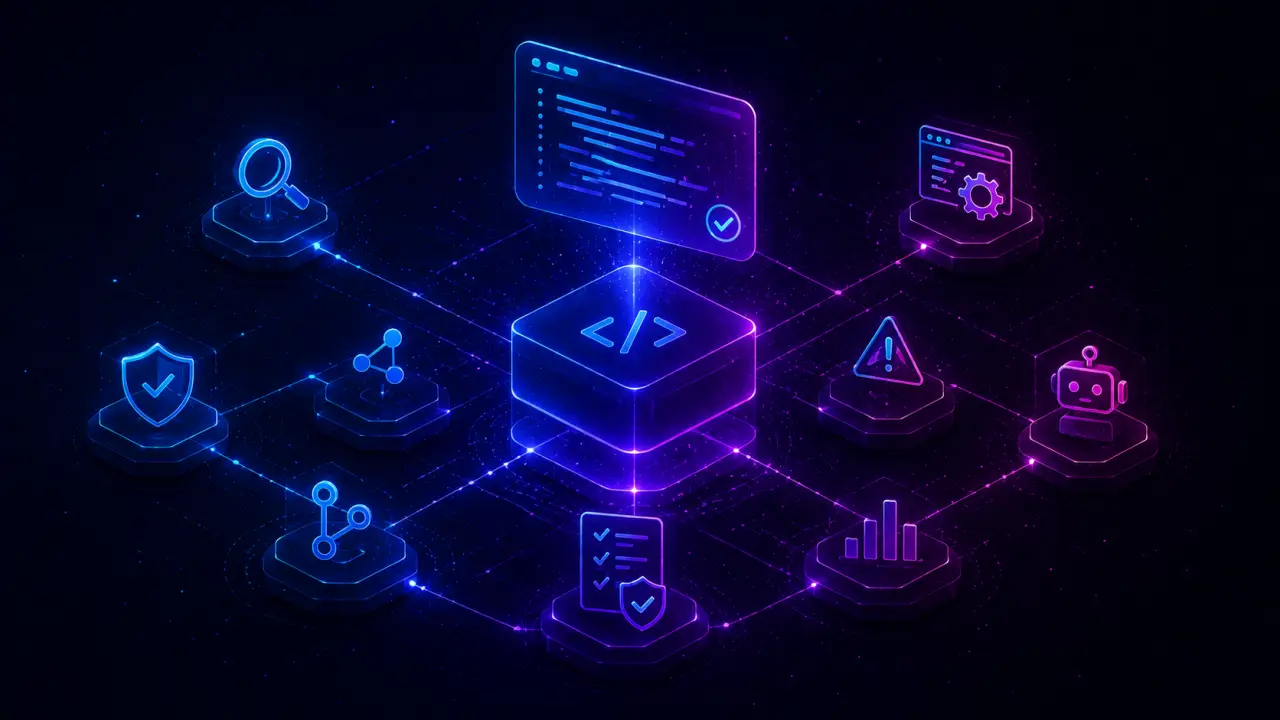
A skill is a set of instructions packaged as a SKILL.md file that an AI agent reads to learn a new workflow. OpenClaw uses the same SKILL.md standard as Claude Code, which means most skills work across both agents without modification. These are the best ones to install right now. > Quick Answer: The most impactful OpenClaw skills in 2026 are code review, git commit writing, test generation, environment diagnostics, and documentation generation. All use the SKILL.md format and work across OpenClaw, Claude Code, Codex CLI, and other compatible agents. Browse them at agensi.io/skills.
What makes OpenClaw skills different?
OpenClaw uses the same SKILL.md format as Claude Code. A skill written for one agent works in the other without changes. The directory structure is nearly identical — personal skills go in `~/.openclaw/skills/` instead of `~/.claude/skills/`, and project skills go in `.openclaw/skills/` instead of `.claude/skills/`. The practical difference is in how OpenClaw discovers and loads skills. OpenClaw scans skill descriptions at session start and uses the same trigger-based loading that Claude Code uses. If a skill's description says "use when the user asks to review code," OpenClaw loads it when you ask for a code review. This means you can evaluate skills on either agent and expect the same behavior on the other.What are the best code review skills?
Code review is the highest-value category for any AI coding agent. A good code review skill catches bugs, security issues, and style violations before they reach a pull request. The code-reviewer skill on Agensi organizes findings by severity (critical, warning, suggestion), checks for common security patterns, and follows a structured output format. It works identically in OpenClaw and Claude Code. For security-focused review, the security-audit skill scans for OWASP Top 10 vulnerabilities, hardcoded secrets, and authentication bypasses.What are the best testing skills?
Testing skills instruct OpenClaw to generate tests that match your framework and conventions. The best ones detect whether you use Jest, Vitest, Pytest, or Go's testing package and generate accordingly. A good testing skill goes beyond basic happy-path tests. It explicitly instructs the agent to check null inputs, empty arrays, boundary values, error states, and concurrent access patterns. Browse testing and QA skills on Agensi.What are the best git automation skills?
Git automation is where skills save the most daily time. The git-commit-writer skill reads your staged changes, detects the commit type (feat, fix, refactor, docs), identifies the scope, and writes a conventional commit message. It handles breaking changes and multi-file commits. The pr-description-writer generates pull request descriptions from branch diffs, covering what changed, why, and what reviewers should test. The changelog-generator transforms commit history into user-facing release notes, grouping changes by type and filtering out internal commits.What are the best DevOps skills?
The env-doctor skill diagnoses why your project won't start. It checks runtime versions, dependencies, environment variables, database connections, and port conflicts. When a teammate messages "it doesn't work on my machine," this is the skill that figures out why. For deployment workflows, DevOps skills can enforce pre-deploy checklists, validate configuration files, and generate infrastructure-as-code templates. Browse DevOps and deployment skills on Agensi.What are the best documentation skills?
The readme-generator skill scans your project and generates a complete README with installation, usage, configuration, and contributing sections. Documentation skills are particularly useful in OpenClaw because they can read your entire codebase context and produce documentation that accurately reflects what the code does, not just what you think it does.How do I install skills in OpenClaw?
Download a skill from Agensi or clone from GitHub, then unzip to `~/.openclaw/skills/`: ```bash unzip code-reviewer.zip -d ~/.openclaw/skills/ ``` Start a new OpenClaw session. The skill loads automatically. Verify with: ```bash ls ~/.openclaw/skills/ ``` For detailed instructions, read How to Install Skills in OpenClaw. --- *Browse security-scanned skills for OpenClaw, Claude Code, and 20+ agents on Agensi.*Frequently Asked Questions
Is the content on this page free to use? Yes — all resources on PromptSpace are completely free. Try our free AI image generator or browse 4,000+ AI prompts at no cost.How do I get started with AI tools? Start with a clear goal and specific prompts. The more detail you provide — audience, format, tone, constraints — the better the AI output.
Can I use AI outputs commercially? On paid tiers of major platforms, yes. Always verify the specific tool's terms of service for your use case.
Where can I find more AI resources? PromptSpace has 4,000+ free AI prompts and 150+ free tools — browse the library or try the AI image generator.