Ninety-six percent of pages published on the web get zero clicks from Google. Not "a few," not "some." Zero. Ahrefs pulled that number from a study of eleven billion pages, and I keep coming back to it because it explains why most content sites feel permanently stuck at 200 daily visits.
The four percent that do get traffic are not lucky. They are following the same repeatable playbook — a 3-stage roadmap that starts with strategy, moves through four SEO fundamentals, and ends with diversifying so no single platform can wipe them out overnight.
This is that roadmap. It is the exact one we are using at PromptSpace to scale from roughly 1,300 daily visits (~9,000 weekly) to 20,000 weekly. No growth hacks, no paid loops, no clickbait. Just the four moves that actually shift rankings in 2026 — plus the ones you should skip.
What you'll find in this guide
- Stage 1 — Pick a strategy that compounds (not one that spikes)
- Stage 2 — The four SEO fundamentals that get you the first 20k weekly visitors
- Keyword research: the 3-point checklist that beats every "hack"
- How to get daily traffic to your website organically (by matching intent)
- Backlinks: three tactics that actually earn links
- Site structure: the SEO lever nobody talks about
- Stage 3 — How to get daily traffic to your website for free (through diversification)
- How many blog posts to reach 20k weekly visitors?
- How long does it take to get 20k weekly traffic?
- What this roadmap will NOT fix
- Frequently asked questions
Stage 1 — Pick a strategy that compounds, not one that spikes
Before we touch a single keyword, we need to decide which type of traffic we want. There are basically two shapes:
Viral traffic is what you get from social media hits, paid ads, and Product Hunt launches. The graph looks like a mountain — massive spike, then a cliff, then flatline. You end up in exactly the same place you started, only more tired.
Evergreen traffic is what you get from search engine optimization. It does not deliver an instant party. It looks more like a hockey stick — a flat line for three to six months, then a curve that keeps bending up every quarter as your pages accumulate backlinks, dwell time, and Google's trust. It is free, it is consistent, and it compounds.
If your goal is 20,000 weekly visitors that stay 20,000 weekly visitors, only one of those shapes matters. Pick the compound curve.
Stage 2 — The four SEO fundamentals that get you the first 20k weekly visitors
SEO gets branded as "technical" because it makes consultants sound impressive. At the stage most content sites are in — under 20,000 weekly visits — it is not technical at all. It is four moves, done in order, done well:
- Keyword research — find topics people actually search for
- Search intent — match what searchers want before they know they want it
- Backlinks — earn signals that tell Google you are worth ranking
- Site structure — funnel authority to the pages you want to win
Skip any of the four and the whole engine sputters. Nail all four and traffic shows up whether you promote it or not.
Keyword research: the 3-point checklist that beats every "hack"
Start by dumping every broad keyword in your niche into a text file. Do not filter yet. If your site is about running a Shopify store, that list might look like: "shopify apps," "shopify themes," "product descriptions," "abandoned cart," "shipping rates," and thirty more. Ten minutes, brain-dump, no editing.
Feed that list into any keyword tool — Ahrefs Keywords Explorer, Semrush, or even the free version of Ahrefs Keyword Generator — and pull the "Matching terms" report. You now have three thousand keywords instead of thirty. That is your big list.
Now narrow it. Every keyword you keep must pass this three-point check:
Checkpoint 1: Search demand
Look at monthly search volume. You want something above 100 monthly searches and, more importantly, consistent. A keyword that spikes to 40,000 once a year and dies for the other eleven months is a trap. Boring flat lines beat sexy spikes every time.
Checkpoint 2: Realistic rank potential
This is the checkpoint most beginners skip, and it is why they publish for a year and hit zero traffic. Google ranks pages on domain-level authority, not just page quality. If Forbes, HubSpot, and NerdWallet already own the top three slots, your two-month-old blog will not dislodge them — no matter how good the post is.
The shortcut: run your own domain through Ahrefs' free Website Authority Checker. Whatever Domain Rating (DR) it gives you, add 10. That is your ceiling. Filter your keyword list to only show keywords where at least one page in the top 5 has a DR at or below your ceiling. Those are the keywords you can actually win in the next 90 days.
Our new content section sits at DR 12. Ceiling is 22. We ignore anything where every top-5 result is DR 60+. It stings, but it is the difference between six months of publishing into a void and six months of watching Search Console clicks compound.
Checkpoint 3: Business value
Ask this out loud for every candidate: would someone searching this be a plausible customer for what I sell?
If you sell AI prompt packs, "best chatgpt prompts for etsy sellers" is a five-star match. "Elon Musk's favorite AI model" has volume and low competition — and zero business value. Rank for it and you get traffic that never buys, never subscribes, never converts. Traffic without intent is a vanity number.
How to get daily traffic to your website organically (by matching search intent)
Google's only job is to give the searcher exactly what they came for. The pages ranking in the top three positions are — literally, algorithmically — Google's best guess at what searchers want. If the top results are all price comparison tables, that is what searchers want. If they are all step-by-step tutorials, that is the intent. Fight the SERP at your peril.
So step one is dead simple: search your target keyword, look at what is ranking, and match that format. If everyone else is a listicle, write a listicle. If everyone else is a how-to, write a how-to. Copying format is not lazy — it is the prerequisite for even entering the game.
But copying format alone will not outrank incumbents. What actually beats them is the next-question rule: after satisfying the primary query, answer the next five things the reader will wonder — before they have to leave your page to ask them.
Say the query is "how much do guitar lessons cost." The primary answer is a price range. The next five questions are almost always:
- Why is there such a wide range?
- How do I tell if a teacher is any good?
- What should I expect to learn in the first month?
- Are group lessons a viable cheaper alternative?
- Is it worth the money at all versus free YouTube tutorials?
Answer those in H2 or H3 sections and you have turned a one-question post into an entire buyer's journey. Google notices when readers stop bouncing between search results because your page settled the whole question. That is the "helpful content" signal without the marketing gloss.
Backlinks: three tactics that actually earn links in 2026
Backlinks are still one of Google's strongest ranking signals. Almost every study run since 2016 confirms this. If your site is not getting traffic and every other piece is in place, the missing ingredient is almost always links.
Get the easy ones first — links to your homepage. Three tactics that still work:
Tactic 1: Podcast link building
Podcast hosts almost always have a website. When you appear as a guest, the episode page links to your homepage and your social profiles. Google "best [your niche] podcast," find five hosts that fit your expertise, and pitch them. One podcast a month = twelve highly relevant backlinks a year, zero cost.
Tactic 2: Listicle link building
Find every "best of" post that ranks for the queries adjacent to your product ("best online guitar lessons," "best AI prompt libraries," "best Shopify apps for shipping"). Read them. Find a specific reason your site deserves a spot — a feature they missed, a competitor that changed pricing or shut down. Email the author with the specific angle. About one in five will update the post.
Tactic 3: Reverse-engineer a competitor
Take a site that is similar in scope and audience to yours. Drop its URL into Ahrefs' free Backlink Checker in "exact URL" mode. You will see up to 100 sites already linking to their homepage. In the paid version you will see thousands. Every one of those sites is willing to link to a site like yours. That is the highest-conversion outreach list you can build.
Now the harsh truths. Homepage links help your whole domain's authority, but they do not directly rank individual blog posts. You also need links to those specific posts, and those are much harder to earn — nobody wants to link to "how to play the F chord on guitar." Which brings us to the piece that saves you.
Site structure: the SEO lever nobody talks about (and everyone loses to)
Every backlink you earn carries "PageRank" — Google's original ranking currency, still very much alive under different names. When a strong external site links to your homepage, that homepage's PageRank goes up. Here is the part most beginners miss: PageRank flows through internal links.
If your homepage links to a "Guitar Chords" hub page, some of that PageRank passes to the hub. If the hub links to twelve individual chord tutorials, some flows to each of those. This is why a well-structured site can rank pages that themselves have zero external backlinks — the internal plumbing carries them.
The pattern that works is the classic hub and spoke:
- Build one deep hub page per topic cluster (2,500+ words, targets the fat mid-tail keyword)
- Build 5-10 spoke pages that target long-tail sub-questions
- The hub links out to every spoke. Every spoke links back to the hub. Spokes link laterally to each other where the reader would actually want that.
Do this and you can rank pages you never got a single external link for. It is also the only backlink type you fully control, which makes it the most reliable lever on the entire list.
Which SEO fundamental should you fix first?
Not every site needs to start at the same place. Use this quick diagnostic:
| Symptom | Likely bottleneck | Fix first |
|---|---|---|
| Site under 6 months old, DR under 10 | No authority yet | Site structure + homepage backlinks |
| Pages get impressions in GSC, no clicks | Title/meta don't match intent | Search intent audit |
| Pages rank #8-15, plateau there | Missing depth or internal links | Add hub-and-spoke links |
| Content is great, no one finds it | Wrong keywords (too hard or zero volume) | Redo keyword research |
| Site over 12 months, DR 20+, still flat | Backlink famine | Aggressive outreach |
Stage 3 — How to get daily traffic to your website for free (through diversification)
Every visitor of SEO traffic you build is a visitor someone else controls. Google can — and does — rewrite ranking systems overnight. Sites that were doing everything right in September 2023 lost 60% of their traffic in one core update. Justified or not, it is the platform's prerogative.
Once your SEO machine is producing consistent baseline traffic, layer on other channels. Two rules:
- Your audience must already spend real time there. Skip channels where you would be shouting into an empty room.
- Prefer low-effort-to-reward ratios. Repurposing wins on day one; from-scratch content on a new platform rarely does.
Concretely: a well-researched blog post can become a Twitter thread, a LinkedIn carousel, a YouTube tutorial, and three Reels — all from one artifact. That is repurposing. That is what "diversify" looks like when it is honest.
Give each channel a fair 90-day test. Track the one metric that matters — clicks back to your site. Kill the losers, double down on the winners. The winning channel will surprise you every time.
How many blog posts to reach 20k weekly visitors?
The rough math is: average post × number of posts = your traffic. If a well-researched post pulls 200 weekly visits at steady state, you need roughly 100 posts to hit 20,000 weekly. If your average is 400 weekly, you need 50 posts. If your average is 80, you need 250.
Reality is always a power curve. Twenty percent of your posts will produce eighty percent of your traffic. Plan for 80 to 120 well-targeted posts to reach the 20k-weekly mark reliably, and expect eight to fifteen of them to become the actual traffic engines. Publishing fewer than 40 posts is usually not enough data to know which style, format, or topic cluster is working.
Publishing cadence matters less than most people think. Three thoughtful posts a week for 12 months beats fifteen thin posts a week for four weeks. Google indexes and ranks slowly — a firehose does not speed that up.
How long does it take to get 20k weekly traffic on a website?
For a brand-new domain with no backlinks, 20,000 weekly visitors typically takes 10 to 18 months of consistent publishing on the right keywords. First-page rankings on any keyword start appearing between week 8 and week 16. Meaningful traffic — around 2,000 to 3,000 weekly visits — usually lands in months 4 through 8. The 20,000-weekly line typically comes somewhere between month 10 and month 18 for content-first sites.
Sites launched with existing authority (a rebrand, a subdomain of a stronger property, or a well-crafted acquired domain) can compress that to 4 to 8 months. Anyone quoting 90 days is optimizing for their own sales page, not your outcome.
What this roadmap will NOT fix (be honest with yourself first)
Every framework has edges. This one has four:
- It will not work in three months. Realistic timelines: first ranked keywords in weeks 8-16, meaningful traffic (2,000+ weekly) in months 4-8, the 20k-weekly target somewhere between month 10 and month 18. Anyone selling faster is selling something else.
- It will not save a niche with no commercial intent. Some topics have plenty of searches and zero buyers. If your entire keyword list scores 1 on business value, you are building a hobby site, not a business.
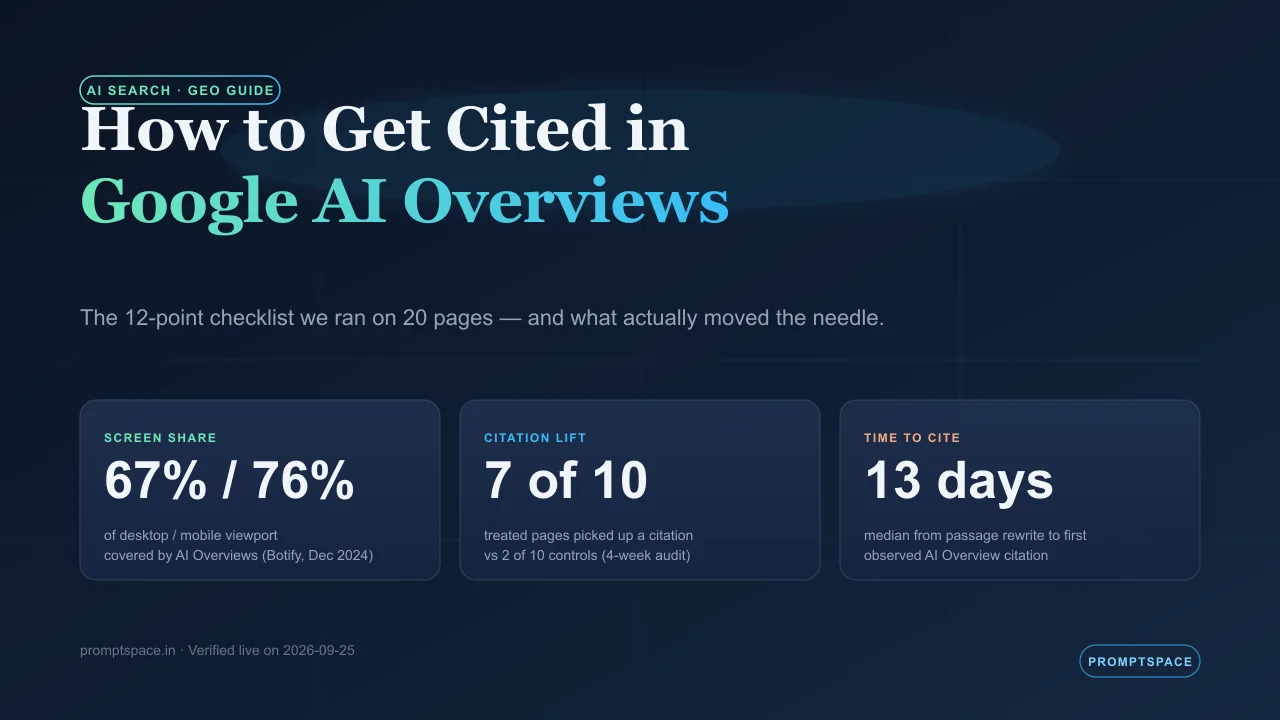
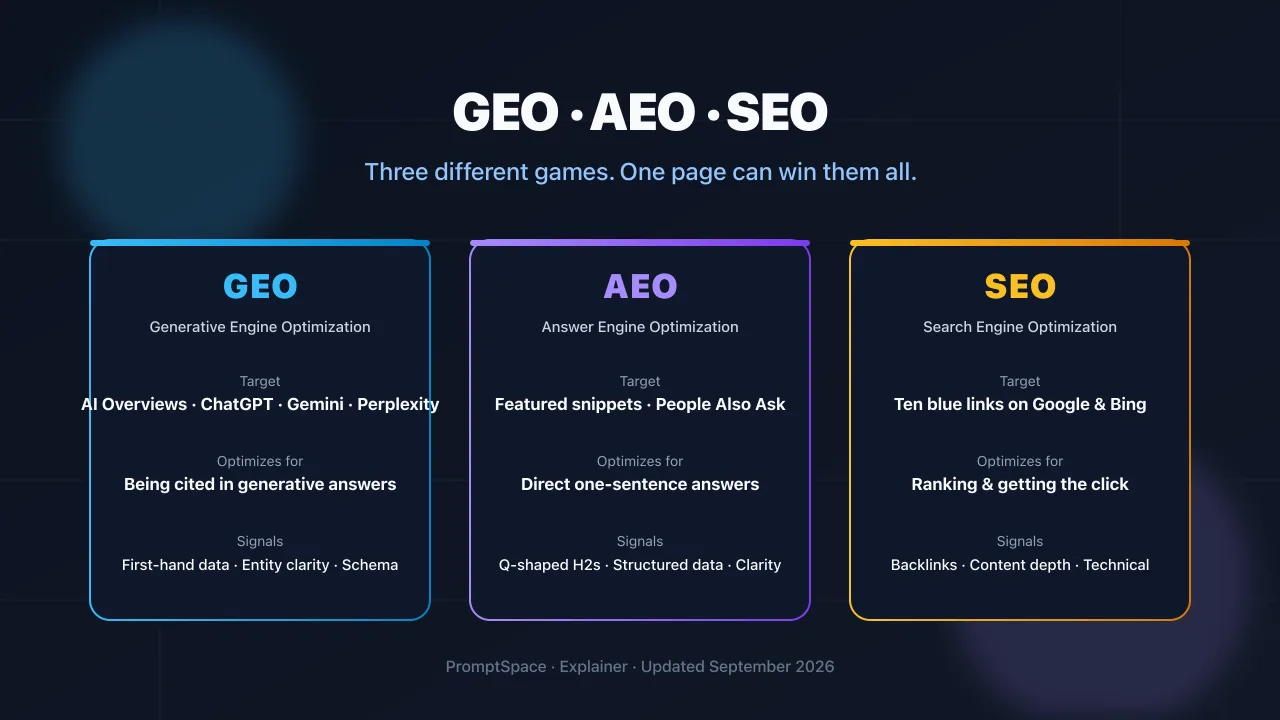
- It will not overcome AI Overviews for informational queries. Google's AI answers now steal roughly 34% of clicks on definitional keywords. Compensate by targeting comparative, transactional, and how-to queries where users still click through to the source.
- It will not compensate for a broken site. If your Core Web Vitals are red, your hosting has a 4-second TTFB, and your mobile layout is chaotic, no amount of keyword picking will help. Fix the foundation before you write the next post.
Frequently asked questions
How to get daily traffic to a website for free?
The only reliable free daily-traffic source is organic search. Paid ads, giveaways, and social bursts all stop the moment you stop paying or posting. Free traffic that shows up every day comes from ranking pages on Google for queries with steady monthly search volume. Focus your first ninety days on publishing 15 to 25 tightly-targeted posts against low-competition long-tail keywords, then repeat.
How long to get 20k weekly traffic on a website?
Realistic timeline for a brand-new site with no prior authority: 10 to 18 months of consistent publishing. Sites with existing domain authority (a rebrand or well-aged domain) can compress that to 4 to 8 months. First-page rankings typically appear between weeks 8 and 16 on individual keywords; the compound curve to 20,000 weekly visits takes patience.
How many blog posts do I need to reach 20k weekly visitors?
Assuming a healthy average of 200 weekly visits per ranked post, you need roughly 100 posts. In practice, only 20% of your posts will drive 80% of your traffic — so 100 posts typically means 20 "hero" posts doing the heavy lifting and 80 supporting spokes. Plan for 80-120 posts as your realistic corpus size.
Do I need paid tools like Ahrefs or Semrush to do this?
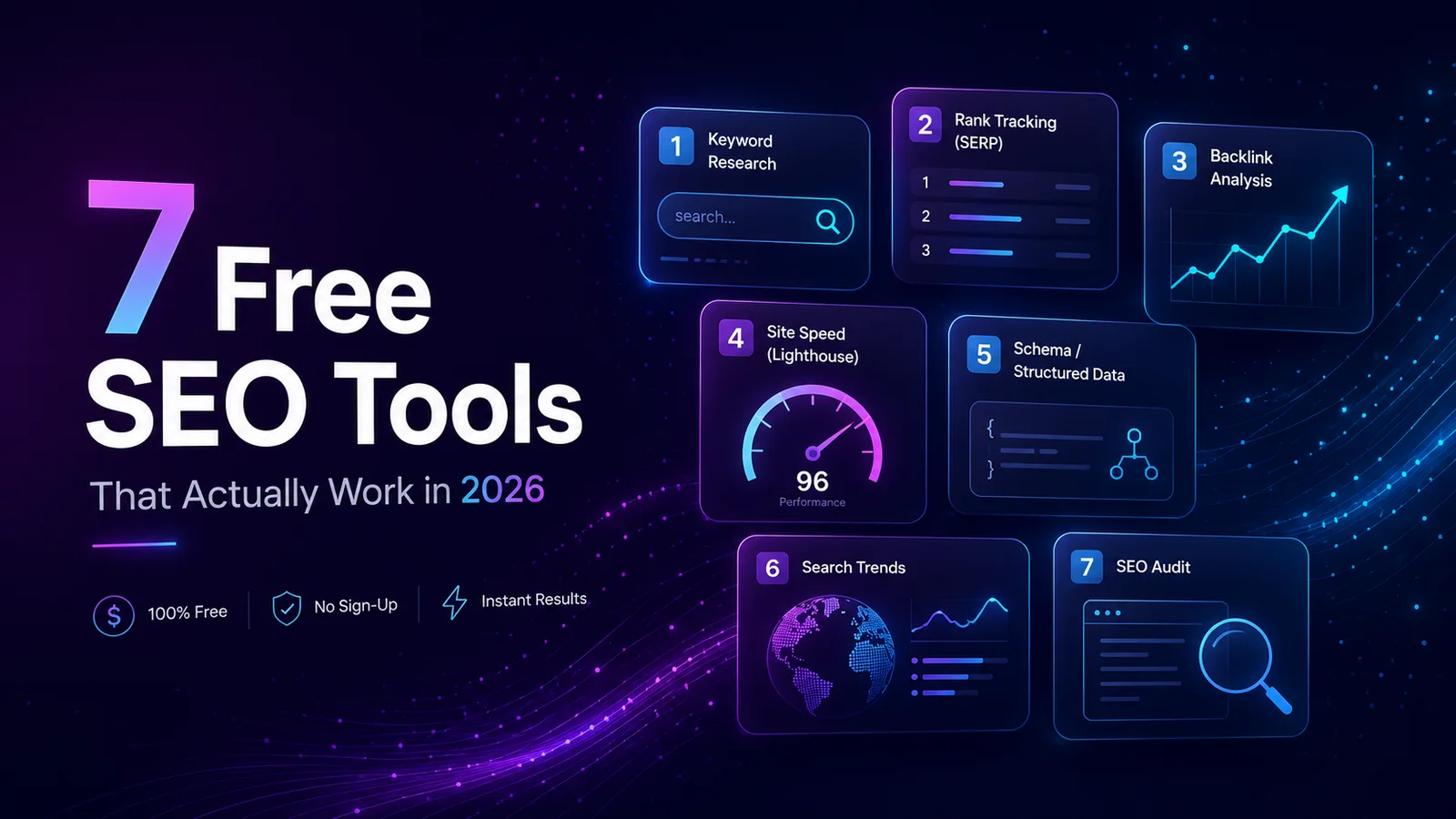
No, but they compress time dramatically. Free versions of Ahrefs Keyword Generator, Website Authority Checker, and Backlink Checker cover the essentials. Google Search Console is free and shows your actual click and impression data — which no paid tool has. If you can only afford one paid tool in year one, get an SEO crawler (Screaming Frog free tier crawls 500 URLs) before you get a keyword database.
Should I target high-volume keywords or low-competition long-tails?
Under DR 30, chase long-tails almost exclusively. A cluster of 20 pages each pulling 200-500 monthly visits will outperform two "big" pages targeting head terms that never rank. Once your domain authority climbs into the 40s, you can start competing for the fatter terms. Playing above your weight class earlier just wastes months.
How to get consistent blog traffic organically without paid ads?
Consistency comes from evergreen keyword targeting, not from viral posts. Pick keywords where monthly search volume has been stable for two or more years — search "keyword" in Google Trends and confirm the line is horizontal, not a mountain. Rank ten to twenty of those pages and your traffic floor becomes predictable within a 15% band, month after month.
What about AI-generated content — will it still rank in 2026?
Google's stated position is that AI content is fine if it is helpful, original, and satisfies searcher intent. In practice, thin AI content — the "generate 500 posts in a weekend" playbook — is getting penalized in every 2024-2026 core update. AI as a research and drafting tool with meaningful human editing, original examples, and first-hand insight continues to rank normally. The differentiator is not "written by AI vs human" — it is "does it deserve the reader's time."
What is a good Domain Rating (DR) to aim for in year one?
DR 20-30 is a realistic year-one ceiling for a site starting from zero, publishing consistently, and running three to five deliberate backlink outreach campaigns per quarter. DR 30 opens up meaningfully more keywords to compete for. DR 40+ generally requires either a much longer timeline or a coordinated PR push, guest posting on major industry outlets, or a viral resource that earns editorial links organically.
How often should I update older posts?
Every 6-12 months for evergreen content, immediately for anything that mentions dates, prices, or tool versions. A refresh — updated stats, new screenshots, one new section, republished date — routinely produces bigger traffic gains than publishing a brand new post. Track your top 20 pages and cycle through refreshing them every quarter.
Your next 60 minutes
If you take one action from this guide, take this: today, right now, run your own domain through the DR checker, add 10, and rebuild your keyword shortlist against that ceiling. That single filter kills more wasted time on SEO than any other move.
Then pick one hub topic, sketch its five to ten spokes on paper, and write the hub this week. That is stage one, stage two, and half of stage three activated in a single afternoon.
If you want the AI research and drafting layer that makes the writing 3-4× faster without producing slop, browse the PromptSpace prompt library — the SEO content pack alone has 40 tested prompts for keyword clustering, brief generation, and post outlines. And if you want to see this framework applied to specific verticals, our AI content pipeline guide and free SEO tools breakdown pair with this one.
Twenty thousand weekly visitors is not a distant dream. It is 100 well-targeted posts, four SEO fundamentals, and enough patience to let compounding do its job.