Best Free Reaction Time Games in Your Browser: Test and Improve Your Reaction Speed (2026)
Everyone thinks they have fast reactions until they take a real reaction time test. The average adult clocks in somewhere between 250 and 290 milliseconds on a visual stimulus — slower than most people guess, faster than most people fear. If you're a gamer, a driver, an athlete, or just curious, a browser reaction test is the fastest way to get an honest number. The catch: most of the reaction time games you'll find in a five-second Google search are either unplayably ad-heavy, don't actually calibrate for input lag, or just show you a green square with no feedback beyond a number. This guide covers the 12 that are worth your time in 2026 — what each one measures, what a good score looks like, and whether reaction time is actually something you can train. If you're specifically interested in game development for AI-agent workflows, our Blender + AI agents guide and IGDB market research for indie devs are the two most-read companion posts on the games side of the blog.What is reaction time actually measuring?
Reaction time is the delay between a stimulus and your response. In a browser reaction test, the stimulus is a visual change (a color flip, a shape appearing, a light turning green) and the response is a click, a spacebar press, or a tap. The gap between them — measured in milliseconds — is your reaction time. Two things are getting measured at once: how fast your visual system detects the change, and how fast your motor system executes the click. In healthy adults, the visual detection portion is remarkably consistent — around 100ms. Motor execution is where variance lives, and where practice actually helps. Reaction time is not the same as reflex time. A reflex is a spinal-loop response (touching a hot stove, knee-jerk) and takes about 25ms. What browser tests measure is a decision reaction — you saw something, decided to act, then acted. It's a cognitive-motor loop, not a reflex.What's a good reaction time by age?
The distribution shifts with age, and there's more variance than people expect. These are median times from Human Benchmark and a handful of academic studies, all measured on visual stimulus: - Age 12–17: 220–240ms — teenagers legitimately are faster, both because their brains process visual signals faster and because motor pathways are still peaking - Age 18–29: 240–260ms — the peak plateau for most people - Age 30–39: 250–275ms — slight slowing begins here, mostly on the motor side - Age 40–49: 270–300ms — the decline accelerates a little - Age 50–59: 300–340ms — visible slowdown, but heavily influenced by fitness and screen habits - Age 60+: 340–400ms+ — high individual variance; a fit 65-year-old can beat an unfit 35-year-oldIf you're anywhere within about 30ms of the median for your age, you're average. Under 200ms as an adult is genuinely fast — around 1% of testers. Under 180ms is often a signal of hardware advantage rather than biology (gaming mouse, high-refresh monitor, wired connection).
The 12 best free reaction time games in your browser
Sorted roughly from "simplest test" to "actual game." All are free, all run in the browser, no download.1. Human Benchmark — the standard test
The canonical reaction time test. Screen turns red, then green — click when it turns green. Five trials, gives you an average. If you click too early it counts as a false start and the trial doesn't count. It's boring, which is a good thing — you get a clean number without gamification skew. What it measures well: raw visual-motor reaction on a single stimulus. What it misses: anything predictive or pattern-based. Median score: ~273ms for the general public, ~215ms for competitive esports players.2. Reaction Time Test on Cognitive Fun
Similar single-stimulus test but with a longer 10-trial run and a distribution graph at the end. The graph is where it earns its place — you can see whether you're consistent (tight cluster) or streaky (wide spread). Consistency matters more than peak speed for most real-world applications.3. Aim Trainer (BenchYourself.io)
Targets appear at random positions on the screen; click them as fast as they show up. Combines reaction with hand-eye tracking. Better predictor of FPS gaming performance than pure reaction tests. Difficulty scales with target size and interval.4. Sheep Dash on BBC's site
A quirky classic from the BBC that's been running since 2009 and still works. Sheep run across a field; when one "dashes," you click. Five trials. The framing is charming and the calibration is legitimate — it accounts for slow reactions and false starts distinctly.5. Reaction Speed Test on Justpark
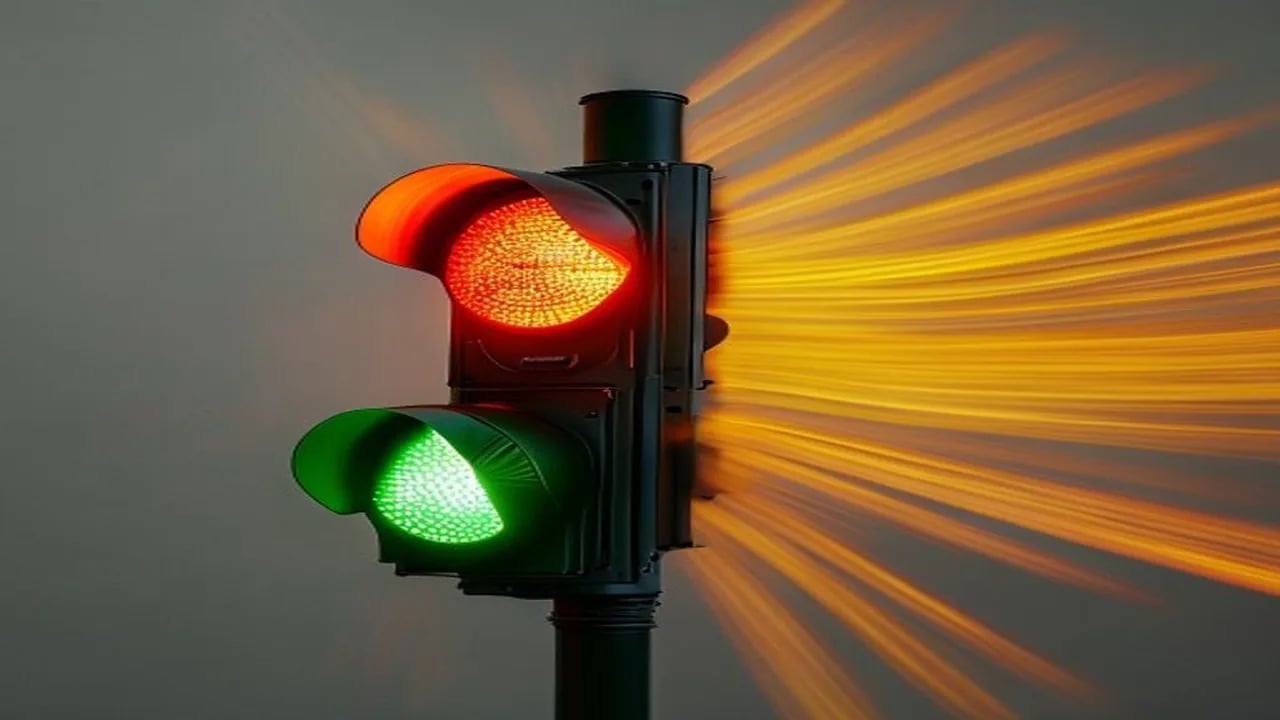
Positioned as "test your reactions like a driver" — traffic light goes green, click. The framing makes people take it more seriously; scores tend to be about 20ms faster than Human Benchmark on the same person, probably because the driver mindset primes motor pathways. Whether that's a "real" improvement or just priming is up to you.6. Reaction Trainer on Ninja Reflex
Trains complex reactions — a shape appears in one of four quadrants and you have to click the matching quadrant. Involves a decision, not just a click. Reaction times here run 50–100ms slower than simple reaction tests because of the extra cognitive step. Better for gaming or driving-relevant training.7. Whack-A-Mole (retro browser version)
Classic 60-second whack-a-mole. Moles pop out of holes; click before they duck. Combines reaction with sustained attention — most players get slower after the 30-second mark as focus wanes. Good for measuring endurance, not peak reaction.8. Type Racer
Not a reaction test in the pure sense — but typing speed correlates strongly with fine-motor reaction because you're reacting to individual characters. Type Racer's competitive mode against real opponents adds pressure that surfaces motor consistency in a way solo reaction tests don't.9. GeoGuessr's speed rounds
Adjacent to reaction training — you get 5 seconds to locate a place on the map. Not motor speed but visual-processing speed. Anyone in the top 1% at GeoGuessr speed rounds has trained their visual attention loop to Olympic levels; the transferable skill is scanning-under-time-pressure.10. Kovaak's Web (browser version of the FPS trainer)
The web port of the famous Kovaak's trainer used by pro FPS players. Multiple scenarios: precision, tracking, flick shots. Steep learning curve but genuinely trains competitive reaction habits. Free tier is limited to a handful of scenarios; the full version is a paid Steam download.11. Reaction Time by Nature (research-grade)
Built by researchers at a European university as part of a study on aging and reaction time. Rigorously calibrated for input latency and monitor refresh rate. The trade-off: no gamification, no leaderboard, no leaderboard bragging rights. Just an honest number. The best test to use if you want to track yourself month-over-month.12. Osu! (browser demo)
Osu! is a rhythm game where reaction time meets pattern recognition. The browser demo is limited but shows why competitive Osu! players routinely hit reaction times under 180ms — they're anticipating patterns, not reacting to raw stimulus. Anticipation is the real skill ceiling above raw reflex.Can you actually improve reaction time?
Yes, but less than the training-industry marketing suggests. Reaction time has a genetic ceiling — the difference between a 240ms average person and a 200ms genetic gifted person is not closeable through practice. But the difference between your untrained baseline and your practiced ceiling is real, and typically about 15–25ms of improvement. Three things move the number: Sleep. Well-rested reaction times are 20–40ms faster than sleep-deprived ones. A single night of 5 hours instead of 8 shows up in your test scores. If you want to improve your number quickly, sleep first, train second. Caffeine. 200–400mg of caffeine improves visual reaction time by 10–20ms on average. The effect is real but short-lived (2–4 hours) and comes with rebound slowdown once it wears off. Not a training method — a temporary state-boost. Practice with feedback. Doing 100+ trials over a week or two, with the score visible after each trial, produces genuine improvement — but the improvement is mostly motor (getting the click execution smoother) rather than perceptual (seeing the stimulus faster). Once you plateau, more practice doesn't help. What does not help: expensive reaction-training apps, blue-blocking glasses, nootropic supplements marketed for reaction time, or gaming with a higher-refresh-rate monitor beyond about 144Hz. These all move the needle less than a good night's sleep does.Real-world reaction time by profession
The numbers are more interesting when you have context. From published research and audited player benchmarks: - F1 drivers: 170–200ms on standard visual tests. The advantage isn't raw speed — it's practiced pattern recognition on a track. - Professional Counter-Strike players: 180–210ms. Similar story — they anticipate flashes and peeks, so their effective reaction is faster than their raw reaction. - NBA players: 200–230ms on simple reaction; much faster on go/no-go decisions in-context. - Airline pilots: 240–260ms in cockpit simulators, similar to the general adult population — but their decision-latency is minimized through training and checklists rather than raw reaction speed. - Emergency-response nurses: 250–280ms, unchanged by years on the job — expertise doesn't move raw reaction, it moves decision-making. The pattern: raw reaction time is bounded biologically. What separates elite performers is anticipation and pattern-matching, not stimulus-response speed. Which is good news for anyone who feels slow — the ceiling on "being fast enough" in real situations is much lower than pure reaction tests suggest.Honest limitations of browser reaction tests
Your test result is not just your biology. Three things pollute the number: Input lag. A wireless mouse adds 5–15ms of Bluetooth latency. A 60Hz monitor adds up to 16ms of display latency vs. 144Hz. A budget laptop trackpad on WiFi can add 30ms+. Two people with identical biology can score 40ms apart on the same test purely from hardware. Prediction. Almost every browser reaction test has predictable timing patterns after a few trials — you start subconsciously anticipating the stimulus and clicking early. This inflates your score. The good tests randomize with sufficient variance to defeat prediction; the mediocre ones don't. Mood, hydration, temperature. Reaction time is a state-dependent measurement. If you test once at 10am well-caffeinated and once at 3pm after lunch, you'll see 30–50ms difference — none of which is a change in your biology. The honest way to track reaction time is: same test, same hardware, same time of day, at least 20 trials per session, over at least a month. Anything less is noise.Frequently Asked Questions
What's the fastest reaction time ever recorded?On a repeat-and-average protocol (which filters out lucky single trials), the fastest verified adult scores are around 150ms. Below that starts to become mechanically implausible — the neural signal from retina to motor cortex to finger takes about 130ms minimum, so anything under about 140ms is either measurement error or anticipation (clicking before the stimulus actually registers). Does gaming actually improve reaction time?
Yes, but less than you'd think. Regular gamers score about 20ms faster than non-gamers on simple reaction tests. Beyond that, the advantage plateaus. Where gamers dramatically outperform is complex reactions (multiple simultaneous stimuli, decision-under-uncertainty) — that's a training effect, not a reflex effect. Is my reaction time getting worse as I age?
Slowly, yes. The average adult loses about 1–2ms per year after age 30 on visual reaction tests. Fitness slows the decline dramatically — a 55-year-old who exercises regularly typically scores like an average 35-year-old. Reaction speed is one of the best-studied physical markers that responds to cardiovascular training. Should I try to improve my reaction time to be better at gaming?
Probably not directly. Time spent playing the actual game you care about improves game-specific reaction more than isolated reaction training does. What isolated training helps with is your baseline — getting from unfit-untrained to fit-untrained closes about 50% of the gap to competitive-level baseline. Beyond that, play the game. Are apps like Elevate or Lumosity worth paying for to improve reaction time?
No. Independent studies on cognitive-training apps consistently find near-zero transfer from app performance to real-world reaction tasks. What they measure is improvement on the specific app's task, not on the underlying skill. Save the money.