National Geographic-quality wildlife photography used to require a $12,000 telephoto lens, six months in a hide, and enough patience to bore a monk. AI image generation collapsed that to a well-crafted prompt and 30 seconds of generation time. The catch: 95% of AI wildlife prompts online produce plastic, over-saturated, obviously-fake results. The 35 prompts below are calibrated for photorealism — real lens specs, real behaviors, real light.
35 AI nature and wildlife prompts organized by category — mammals, birds, marine life, macro insects, landscapes, aerial, and underwater. Every prompt uses camera and lens language that materially changes model output. Tested on FLUX 1.1 Pro, Midjourney v7, and free tools. Author: PromptSpace.
The Wildlife Photography Prompt Workflow
- Name the exact species and behavior. "Wolf in snow" produces generic output. "Grey wolf mid-howl at dusk in Yellowstone" produces cinematic output.
- Specify the lens. Wildlife photographers use specific glass — telephoto 400–600mm for mammals, macro 100mm for insects, ultrawide 14–24mm for landscapes. Include this in your prompt.
- Include the light quality. "Golden hour", "blue hour", "backlit rim light", "diffused overcast" — these change the model's output fundamentally.
- Ask for photographic realism. "Shot on Nikon Z9 with 400mm f/2.8" is a shortcut to National Geographic aesthetic in FLUX and Midjourney.
- Generate 8–10 variants. Wildlife photography is a numbers game — the 7th generation is often the winner.
Pro Tip: Real wildlife photography almost never has a centered subject. The best wild shots use rule-of-thirds placement or intentional negative space showing the animal in its habitat. Add "rule of thirds composition, animal placed in left third, generous negative space right" to your prompts. This single instruction makes AI wildlife look 3x more professional.
Wildlife Lens Language Reference
| Subject | Typical Real Lens | Prompt Language |
|---|---|---|
| Large mammals (elk, bear, wolf) | 400mm f/2.8 or 600mm f/4 | "shot with 400mm telephoto lens, extremely shallow depth of field" |
| Birds in flight | 500–600mm f/4 with fast shutter | "shot with 600mm super-telephoto, fast shutter 1/2000, motion frozen" |
| Macro insects | 100mm f/2.8 macro | "shot with 100mm macro lens, extreme close-up, 1:1 magnification" |
| Landscapes | 14–24mm f/2.8 ultrawide | "shot with 16mm ultrawide lens, sweeping composition" |
| Underwater | 16–35mm fisheye with strobes | "shot with wide-angle underwater housing, natural light through water" |
| Aerial / drone | DJI Mavic 3 Pro Hasselblad | "aerial drone shot from 200 feet, overhead perspective" |
Prompts 1–5: Large Mammals
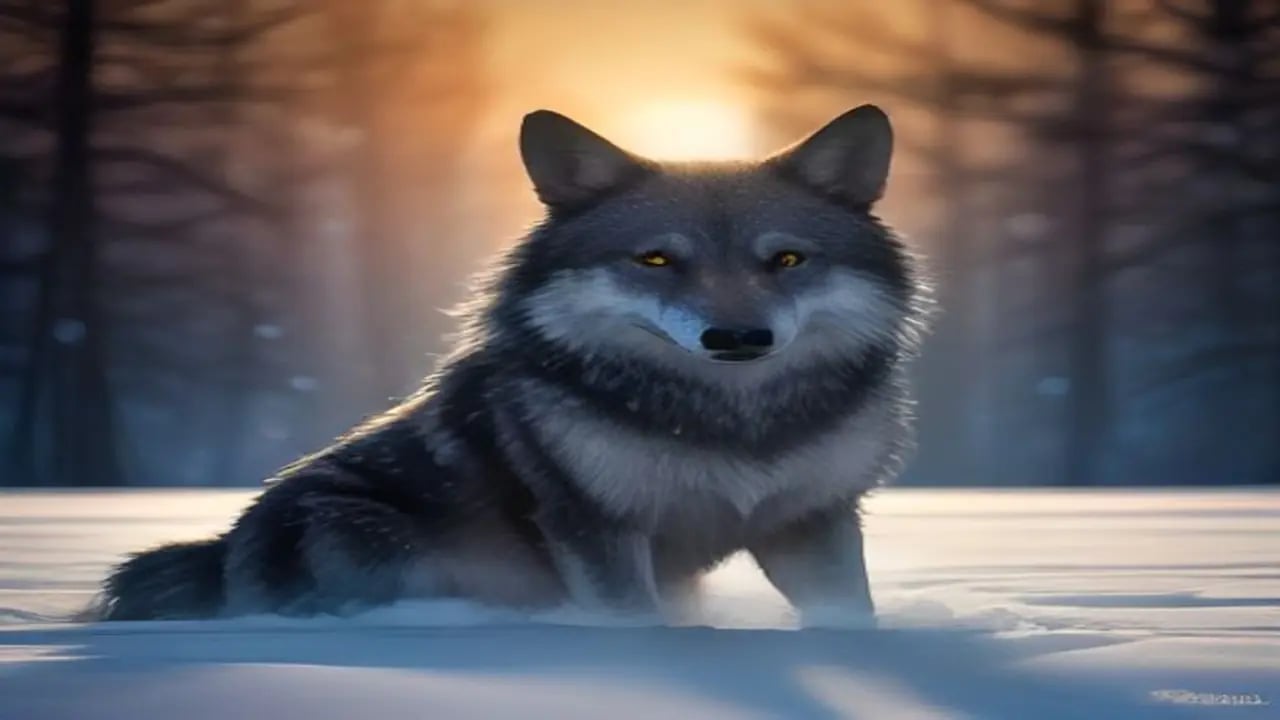
National Geographic style wildlife photograph, grey wolf mid-howl in snow-covered Yellowstone meadow at golden hour, warm sunset backlight creating rim light on fur and breath vapor visible in cold air, rule of thirds composition with wolf in left third, generous negative space right showing distant forest, shot with 400mm f/2.8 telephoto lens on Nikon Z9, extremely shallow depth of field, photorealistic
National Geographic style wildlife photograph, adult male African lion in tall dry grass at dawn with warm golden light backlighting mane creating halo effect, direct eye contact with camera, dust particles visible in air, shot with 600mm f/4 telephoto lens, extremely shallow depth of field, savanna habitat visible in soft bokeh, photorealistic 4K
National Geographic style wildlife photograph, mountain gorilla family with silverback adult and juvenile in misty Rwandan cloud forest, atmospheric fog between trees, dappled diffused light through canopy, intimate observational quality, shot with 200mm f/2 lens allowing environment to remain visible, photorealistic quality
National Geographic style wildlife photograph, brown grizzly bear catching sockeye salmon mid-leap in Alaskan river, water splash frozen mid-action with individual droplets visible, warm afternoon light, shot with 400mm f/2.8 telephoto lens fast shutter 1/2000, extremely detailed fur wet from spray, photorealistic wildlife photography
National Geographic style wildlife photograph, herd of African elephants crossing dusty savannah at sunset with matriarch leading small calf, warm silhouettes against saturated orange sky, dust kicked up by feet catching backlight, shot with 200mm lens from low angle, cinematic quality, photorealistic
Prompts 6–10: Birds
National Geographic style wildlife photograph, bald eagle mid-dive with talons extended toward water surface below, wing feathers spread wide showing individual barbs, dramatic side lighting creating rim on feathers, shot with 600mm f/4 super-telephoto lens fast shutter 1/3200, motion perfectly frozen, photorealistic 4K
National Geographic style wildlife photograph, ruby-throated hummingbird hovering at trumpet vine flower with wings blurred in slow motion, iridescent throat feathers catching directional light, extreme close-up detail, shot with 100mm macro lens fast shutter 1/8000, photorealistic quality showing individual feather detail
National Geographic style wildlife photograph, snowy owl in flight over Arctic tundra with wings spread mid-flap, warm low sun creating rim light on white feathers, snow-covered landscape below in soft bokeh, shot with 400mm f/2.8 telephoto lens, extremely shallow depth of field, cinematic quality
National Geographic style wildlife photograph, flock of hundreds of scarlet ibis taking flight from Venezuelan wetlands at sunrise, saturated red bodies against pale pink dawn sky, motion blur on wings showing flight movement, shot with 200mm telephoto lens medium shutter, aerial atmospheric quality, photorealistic
National Geographic style wildlife photograph, great gray owl perched on snow-covered pine branch in dense forest, direct piercing gaze at camera, warm sunset light streaming through trees behind, atmospheric snow falling gently, shot with 400mm f/2.8 telephoto lens, extremely shallow depth of field, cinematic quality
Prompts 11–15: Marine Life
National Geographic style underwater wildlife photograph, humpback whale and calf swimming toward camera in warm tropical water with sunlight rays streaming down from surface creating god rays, deep blue palette with warm sunbeam accents, shot with wide-angle underwater housing natural light, cinematic quality, photorealistic
National Geographic style underwater wildlife photograph, great white shark in silhouette against sun-lit surface above, cool blue water with mote particles floating, dramatic silhouette composition, shot with fisheye lens looking up from below, photorealistic quality, ominous atmospheric feel
National Geographic style underwater wildlife photograph, sea turtle glinting emerald green shell swimming through Caribbean coral reef with tropical fish surrounding, saturated turquoise water and coral colors, warm shafts of sunlight from above, shot with wide-angle underwater housing, photorealistic
National Geographic style underwater wildlife photograph, common octopus in extreme close-up showing camouflage color-changing skin texture on ocean floor, single eye visible with intelligent expression, cool blue water tones, shot with 60mm macro lens underwater housing, photorealistic scientific quality
National Geographic style underwater wildlife photograph, school of yellowtail tuna in fast swimming formation in open ocean with sunlight streaming down from surface, motion blur on outer fish with sharper center, cool deep blue palette, shot with wide-angle underwater housing, photorealistic dynamic quality
Prompts 16–20: Macro Insects & Details
National Geographic style macro wildlife photograph, monarch butterfly on purple thistle flower with individual scale patterns visible on wings, extreme close-up 1:1 magnification, backlit by warm morning sun creating glow through wings, extremely shallow depth of field, shot with 100mm macro lens, photorealistic quality
National Geographic style macro wildlife photograph, jumping spider portrait extreme close-up with all eight iridescent eyes visible reflecting environment, incredible detail in hair on body, dramatic side lighting creating rim on legs, shot with 100mm macro lens 2:1 magnification, photorealistic quality showing individual seta
National Geographic style macro wildlife photograph, dew droplets on emerald green damselfly wing at dawn with reflection of sky visible in droplets, extreme close-up detail with individual water tension visible, shot with 100mm macro lens 1:1 magnification, extremely shallow depth of field, photorealistic scientific quality
National Geographic style macro wildlife photograph, praying mantis in stalking pose extreme close-up on green leaf with compound eyes facing camera, dramatic side lighting from warm afternoon sun, individual scales and hair visible, shot with 100mm macro lens 2:1 magnification, photorealistic quality
National Geographic style macro wildlife photograph, small tree frog perched on mushroom in rainforest floor with vibrant color patterns visible, morning dew droplets on skin catching diffused light, extreme close-up detail, shot with 100mm macro lens, photorealistic tropical quality
Prompts 21–25: Nature Landscapes
National Geographic style landscape photograph, sunrise over foggy valley in Great Smoky Mountains with warm orange light illuminating individual mist layers between forested peaks, atmospheric depth quality, shot with 24mm ultrawide lens from mountain ridge, cinematic 4K quality, painterly natural composition
National Geographic style landscape photograph, autumn aspens in golden peak fall color along mountain lake reflection perfect mirror surface, warm afternoon light creating vibrant yellow palette against blue sky, shot with 16mm ultrawide lens Colorado San Juan mountains, cinematic quality, photorealistic 4K
National Geographic style landscape photograph, aurora borealis over Icelandic waterfall in winter night, green and violet ribbons dancing across star-filled sky above thundering water with ice formations, cool palette with saturated aurora colors, shot with 14mm ultrawide lens 30 second exposure, cinematic quality
National Geographic style landscape photograph, endless emerald green rice terraces of Vietnamese Sapa mountains at dawn with warm mist rolling through valleys, individual terraces reflecting sky above like stairs of mirrors, shot with 24mm lens from overlook, cinematic quality, photorealistic quality
National Geographic style landscape photograph, single ancient bristlecone pine tree twisted by centuries of wind on bare mountain ridge at sunrise, warm golden light hitting weathered gnarled bark, cool blue sky above with distant snow peaks, shot with 35mm lens, cinematic monument to nature aesthetic
Prompts 26–30: Aerial & Drone
National Geographic aerial drone photograph, overhead perspective of massive humpback whale swimming just below surface of turquoise Caribbean water with subtle wake visible, tropical shallow water showing coral shadows on ocean floor below, shot with DJI Mavic 3 Pro from 200 feet altitude, cinematic quality, photorealistic
National Geographic aerial drone photograph, aerial view over vast African savannah at golden hour with herd of migrating wildebeest in serpentine formation cutting through tall grass, warm sunset light creating long shadows, shot with DJI Mavic 3 Pro from 300 feet, cinematic quality
National Geographic aerial drone photograph, overhead view of Icelandic Highland rivers braiding in fractal patterns through black volcanic sand, extreme high altitude perspective, saturated turquoise glacial water contrasting with dark sand, shot with DJI Mavic 3 Pro from 400 feet, cinematic abstract quality
National Geographic aerial drone photograph, single fisherman in traditional wooden boat at center of vast lotus flower pond in Cambodia with pink blossoms surrounding, overhead perspective showing perfect radial composition, shot with DJI Mavic 3 Pro from 250 feet, cinematic cultural quality
National Geographic aerial drone photograph, aerial view over Norwegian fjord at dawn with mist rolling through and single small fishing village nestled at water's edge, warm morning light hitting mountain peaks above, shot with DJI Mavic 3 Pro from 300 feet altitude, cinematic quality, photorealistic
Prompts 31–35: Arctic & Antarctic
National Geographic style wildlife photograph, polar bear mother and cub walking across broken sea ice at Arctic dusk with orange horizon glow behind, mist visible from breath in cold air, cool blue ice contrasting warm sky, shot with 400mm f/2.8 telephoto lens, extremely shallow depth of field, photorealistic quality
National Geographic style wildlife photograph, colony of Emperor penguins huddled together in Antarctic blizzard with individual snowflakes visible in air, cool blue-white palette, warm light barely piercing through storm from horizon, shot with 200mm lens for group composition, cinematic quality
National Geographic style landscape photograph, massive iceberg drifting through Arctic waters at blue hour with layered ice formations catching cool moonlight above and warm horizon glow below, water reflection perfect mirror, atmospheric quality, shot with 24mm ultrawide lens from ship deck, cinematic quality
National Geographic style wildlife photograph, single Arctic fox with pure white winter coat pausing mid-hunt in deep snow with warm afternoon light creating rim on fur, ears pointed forward listening, direct eye contact, shot with 500mm f/4 super-telephoto lens, extremely shallow depth of field, photorealistic
National Geographic style wildlife photograph, walrus colony on Arctic beach with adults and pups in dense grouping, warm summer sun contrasting cool ocean behind, atmospheric quality, direct observational composition, shot with 200mm telephoto lens, photorealistic documentary quality
Light and Timing — What Real Wildlife Photographers Know
The prompts above all specify a specific light condition. Here's what each produces in AI models:
- Golden hour: the hour after sunrise or before sunset. Warm light, long shadows, low angle. Almost every award-winning wildlife photo is shot in golden hour.
- Blue hour: 20 minutes before sunrise or after sunset. Cool ethereal light, particularly effective for mood shots.
- Diffused overcast: soft even light with no harsh shadows. Ideal for macro work, forest interiors, close-up portraits.
- Backlit / rim light: sun behind subject creating halo effect on fur, feathers, dust. National Geographic loves this — makes fur glow.
- Harsh midday sun: generally AVOID — flat, high contrast, unflattering. Only use for scientific documentary look.
Species Authenticity in AI Prompts
Generic prompts like "big cat" or "hawk" produce hybrid, generic-looking animals. Real wildlife photography prompts name the exact species. Some model-friendly species names:
- Cats: Bengal tiger, snow leopard, mountain lion, jaguar (Panthera species), cheetah
- Bears: grizzly, kermode spirit bear, sun bear, panda, sloth bear
- Birds of prey: bald eagle, great gray owl, snowy owl, red-tailed hawk, harpy eagle
- Marine: humpback whale, orca, great white shark, manta ray, dolphin (bottlenose)
- Antelope: gemsbok, wildebeest, springbok, kudu, ibex
What This Guide Won't Fix
- Anatomically incorrect animals. Even in 2026, AI models occasionally produce extra limbs or wrong feet on animals. Generate 6–8 variants and pick the anatomically correct one.
- Rare/endangered species with limited training data. Common species (lions, eagles, elephants) produce excellent results. Rare species (okapi, saola, olm) may drift toward common relatives. Add descriptor terms if needed.
- Behavior sequences. AI can render "wolf mid-howl" but sequencing behavior across shots is hard. For behavior stories, generate multiple angles then edit.
- Field-standard accuracy. Do not use AI wildlife imagery as scientific reference. Species patterns and coloration can be inaccurate at close inspection.
Frequently Asked Questions
Can AI wildlife photography be sold as stock?
Legally yes with paid model tiers (FLUX Pro, Midjourney Pro). Ethically stock platforms increasingly require disclosure — Shutterstock, Getty, and Adobe Stock all have AI content policies as of 2026. Some editorial buyers reject AI imagery categorically. Non-editorial commercial use (design, packaging, decor) has almost no restrictions. Always disclose to buyers.
Which AI model handles wildlife best in 2026?
FLUX 1.1 Pro is the current leader for photorealistic wildlife — its handling of fur, feathers, water, and specific species is materially better than Midjourney v7. Midjourney v7 is better for stylized wildlife (painterly, illustration, poster-like). For fast free iteration try PromptSpace's free AI image generator which runs FLUX under the hood.
Why do my AI wildlife images look plastic?
Three main reasons: (1) over-saturated colors — request "muted natural palette" or "restrained saturation", (2) too much sharpness — request "photographic depth of field, natural bokeh", (3) missing camera language — always include specific lens and aperture. "Shot with 400mm f/2.8 lens on Nikon Z9" is the single most effective anti-plastic prompt addition.
Can I make an AI wildlife photography portfolio for social media?
Yes, and it works well on Instagram, TikTok, Pinterest. Requirement: disclose AI content in captions per each platform's rules. Structural advice: pick one specific niche (Arctic wildlife / raptors / macro / etc.) rather than mixing everything. Niche consistency drives algorithmic amplification more than image quality alone.
How do I get consistent style across a wildlife series?
Fixed camera language in every prompt. "Shot on Nikon Z9 with 400mm f/2.8, extremely shallow depth of field, warm golden hour rim light" repeated across all your shots produces consistent color science. Adding a photographer reference — "in the style of Paul Nicklen" or "in the style of Ami Vitale" — anchors the model further.
Are these prompts also good for AI video wildlife?
Yes. Use a still from these prompts as the reference frame in PromptSpace's AI video generator, then add motion instruction: "slow parallax right", "handheld tracking follow", "static observational shot". The video model handles motion — do not repeat the entire cinematography prompt in the video pass.
Do I need to worry about copyright with AI wildlife photos?
Two considerations. First: AI output copyright itself is unresolved in many jurisdictions — pure AI images may not be fully copyrightable in the US. Second: some model outputs can accidentally resemble real photographers' work (Paul Nicklen and Steve Winter styles are particularly imitable). If you're using AI wildlife for commercial work, add substantial creative modification (compositing, extensive editing) to strengthen your copyright claim.
How can I upscale AI wildlife to print quality?
Generate at native resolution (~1024×1024 or 1456×816 landscape), then run through PromptSpace's AI image upscaler at 4x. This produces sharp fur, feather, and eye detail at print-ready resolution. Standard print sizes: 16×24 inch requires ~4800×3200 pixels — well within the upscaler's output range.
Build Your Wildlife AI Portfolio
- Free AI Image Generator — iterate 20+ variants without spending credits.
- AI Image Upscaler — bring your winners to 4K print resolution.
- Nature & wildlife prompt library — 100+ more prompts organized by species and biome.
- Cinematic AI Prompts — the film-photography language behind these prompts.
- Realistic AI photo prompts — photographic realism techniques applied to other subjects.
- AI Baby Photography Prompts — same lens language applied to portrait work.
Pick one prompt. Generate 8 variants. Pick the anatomically-correct winner. Upscale. Print. That's a portfolio piece shipped this evening.