Cinematic AI generation crossed the "actually usable for professional work" threshold sometime in early 2026. The difference between an AI image that looks generic and one that looks like a still lifted from a Denis Villeneuve film is almost entirely in the prompt. You do not need better models — you need better camera language, film-stock references, and lighting vocabulary in your prompts.
35 cinematic prompts calibrated for FLUX 1.1, Midjourney v7, Runway Gen-3, and Kling AI 2.0 — noir, thriller, sci-fi, romance, western, and documentary looks. Every prompt includes camera specs (lens, aperture, film stock) that materially change what the model outputs. Author: PromptSpace.
The Cinematic AI Workflow
- Pick your genre first. Noir wants low-key lighting and 35mm grain. Sci-fi wants clean digital and volumetric fog. The prompt structure changes per genre.
- Specify the camera and lens. "Shot on ARRI Alexa 65 with anamorphic lens" is not decoration — it changes color science, DOF, and aspect ratio the model outputs.
- Name a director or DP. "In the style of Roger Deakins" or "Christopher Doyle cinematography" locks the model into a specific visual language.
- Generate 6–10 variants, then pick. Cinematic looks have narrow tolerance — the 7th generation is often the winner.
Pro Tip: The single most under-used prompt technique for cinematic work is film stock naming. "Shot on Kodak Portra 400" produces warmer skin tones and softer highlights than "shot on Fuji Superia 400" every single time. Pick a stock that matches your genre — you will save 20 minutes of re-rolling.
Camera Language That Actually Changes Output
| Term | What It Does | Best Use |
|---|---|---|
| Anamorphic lens | Widescreen 2.39:1, oval bokeh, horizontal lens flares | Sci-fi, thriller, epic drama |
| 35mm film / Kodak Vision3 | Fine grain, natural color, cinema-standard look | General cinematic reference |
| 65mm / IMAX | Ultra high resolution, sharp edges, epic scale | Landscapes, action sequences |
| Handheld camera | Slight instability, immediacy, documentary feel | Thriller, war films, verité drama |
| Steadicam tracking shot | Smooth motion, following action, immersive | Long-take drama, action |
| Low-key lighting | Deep shadows, dramatic contrast, mood | Noir, thriller, horror |
| Golden hour / practicals only | Warm natural light, no artificial fill | Romance, drama, coming-of-age |
Prompts 1–5: Film Noir / Neo-Noir
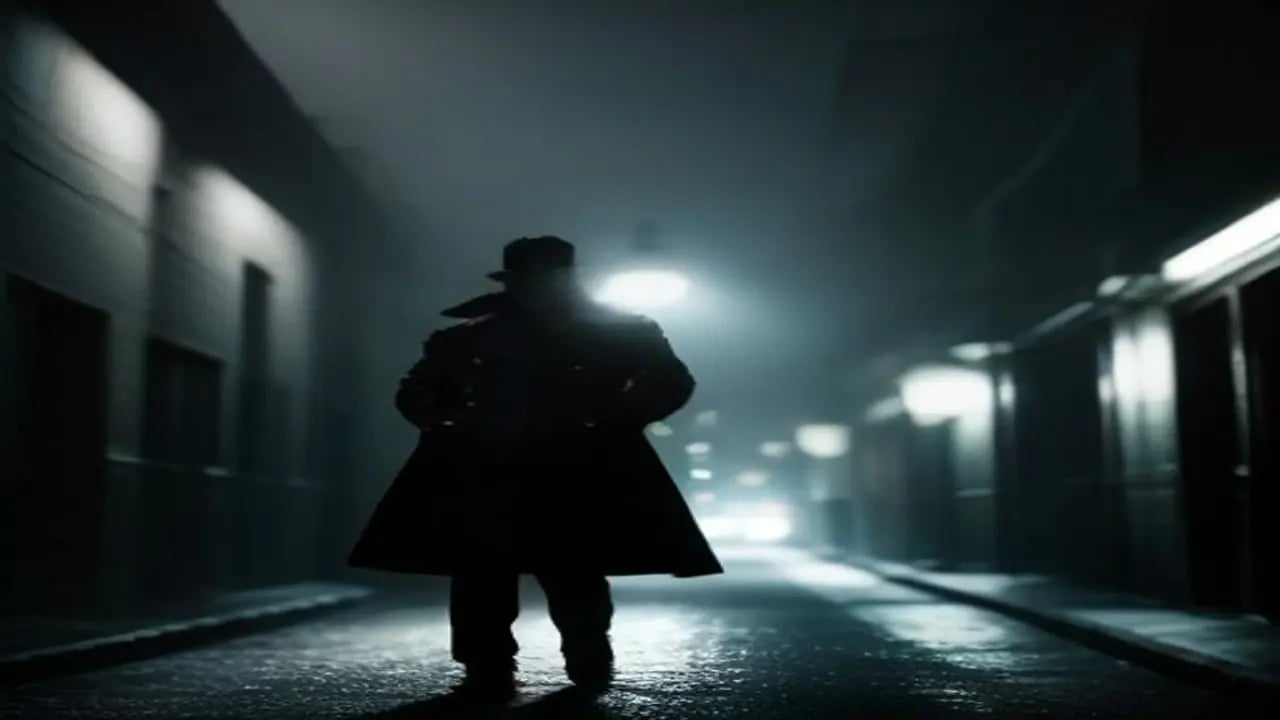
Cinematic film still, lone detective in rain-soaked trench coat standing under a broken streetlamp, cobblestone alley 1940s Chicago, heavy fog rolling in from behind, low-key lighting with hard rim light from single practical, deep shadows carving the face, shot on 35mm Kodak Double-X black and white film, anamorphic lens, style of Roger Deakins cinematography, film grain, 2.39:1 aspect ratio
Neo-noir cinematic scene, femme fatale in red silk dress lit by neon signs reflecting off wet pavement, downtown Los Angeles rain-slick street at night, backlit silhouette with rim light through cigarette smoke, saturated magenta and teal palette, shot on 35mm anamorphic, style of Nicolas Winding Refn, high contrast, editorial framing
Cinematic close-up portrait of hardboiled detective smoking cigarette in dimly lit office, single desk lamp practical creating harsh chiaroscuro across face, venetian blind shadow bars falling across wall behind him, 35mm black and white film grain, style of classic film noir 1948, low-key lighting, deep contrast, shot on Kodak Double-X
Neo-noir wide establishing shot, rain-soaked Tokyo alleyway 2 AM, neon signage in Japanese reflecting in puddles, lone figure walking away from camera in long coat, atmospheric fog with streetlamp beams cutting through, cyan and pink color palette, shot on ARRI Alexa with anamorphic lens, style of Blade Runner 2049 cinematography
Cinematic noir interior, empty diner at 3 AM viewed through fogged window from outside, single figure at counter silhouetted against fluorescent light, cool cyan interior contrasting with warm amber street lamp glow outside, wet pavement reflections in foreground, shot on 35mm anamorphic, style of Edward Hopper meets film noir
Prompts 6–10: Thriller / Suspense
Cinematic thriller wide shot, isolated cabin in dense fog-shrouded forest at dusk, warm interior lights glowing from windows creating single beacon in surrounding darkness, atmospheric mist between trees, muted blue-green palette with warm interior accent, shot on 35mm Kodak Vision3 500T, handheld camera slight instability, style of David Fincher cinematography
Cinematic tight close-up of person's eye reflecting an approaching figure in extreme shallow focus, high contrast black and white with single warm accent, camera pressed close, shot on 35mm anamorphic, style of Denis Villeneuve, film grain visible, tension in framing, editorial thriller magazine aesthetic
Cinematic thriller scene, empty subway platform late at night, single overhead fluorescent tube flickering, lone passenger looking down the tunnel toward approaching train headlights, cool sterile palette with green fluorescent cast, shot on ARRI Alexa 65 with 40mm anamorphic lens, style of Fincher and Deakins, deep shadow negative space
Cinematic suspense sequence, character running through corn field at twilight with camera at chest height tracking, wheat stalks whipping past, motion blur on foreground grass, deep blue-grey sky above, warm horizon glow behind, shot handheld on 16mm film for grain texture, style of M. Night Shyamalan cinematography
Cinematic thriller interior, mid-century modern living room at 2 AM lit only by television static blue light, character seated on couch back to camera, glow reflecting off framed photos on wall, cool eerie palette, shot on 35mm Vision3, style of Ari Aster and Robert Eggers, unsettling stillness
Prompts 11–15: Sci-Fi / Futurism
Cinematic sci-fi wide establishing shot, massive brutalist megacity under overcast grey sky, industrial-scale structures reaching into low cloud cover, monolithic geometry, single small human figure walking foreground for scale, cool concrete and rust palette, shot on IMAX 65mm, style of Denis Villeneuve Dune cinematography, atmospheric haze between structures
Cinematic sci-fi interior, sleek minimalist spacecraft corridor with soft indirect lighting from wall recesses, single figure walking away from camera casting long shadow, cool white and matte grey palette with single amber emergency light, deep DOF, shot on ARRI Alexa 65, style of 2001 A Space Odyssey meets Alien
Cinematic cyberpunk street level scene, rain-drenched Tokyo alley in 2087, dense holographic advertisements in multiple languages, food stall steam rising, densely populated with figures in translucent rain coats, saturated neon palette pink cyan orange, shot on 35mm anamorphic with heavy horizontal lens flares, style of Blade Runner 2049
Cinematic sci-fi character portrait, astronaut inside cramped capsule illuminated by amber instrument panels, condensation on face plate reflecting warm displays, extremely shallow depth of field, warm interior contrasting cold exterior, shot on 65mm Kodak Vision3 500T, style of Interstellar cinematography by Hoyte van Hoytema
Cinematic sci-fi landscape, alien desert planet with dual suns setting on horizon casting long dual shadows, monolithic rock formations, single small figure at bottom for scale, dusty amber and violet palette, atmospheric particulate in air, shot on IMAX 65mm, style of Tatooine reimagined by Villeneuve
Prompts 16–20: Romance / Drama
Cinematic romance golden hour scene, couple embracing in Tuscan wheat field with warm sun backlighting through wheat stalks, dust particles floating in beams, extremely soft warm palette amber gold cream, shot on 35mm Kodak Portra 400 medium format, extremely shallow depth of field, style of Terrence Malick cinematography, ethereal quality
Cinematic drama close-up, hands intertwined on café table by rainy window, warm café interior contrasting cool grey rain outside, extremely shallow focus on hands with soft bokeh, atmospheric warm light from filament bulb overhead, shot on 35mm Vision3, style of Wong Kar-wai In the Mood for Love
Cinematic romantic wide shot, two figures standing at opposite ends of an empty ballroom, moonlight streaming through tall arched windows creating diagonal light beams, cool blue exterior meeting warm golden chandelier glow, elegant Victorian setting, shot on 65mm Kodak Vision3, style of Sofia Coppola Marie Antoinette
Cinematic drama Parisian rooftop at dawn, single figure looking out over city with Eiffel Tower distant in soft haze, warm golden hour light hitting face from right, cool blue city below, shot on 35mm Portra 400, extremely soft palette, style of Before Sunrise cinematography, contemplative stillness
Cinematic romance interior, couple slow dancing in a lamplit apartment kitchen at night, single practical lamp warm glow, motion blur on movement, cool blue night through window contrasting warm interior, shot handheld on 16mm film for intimacy, style of Barry Jenkins and James Laxton cinematography
Prompts 21–25: Western / Frontier
Cinematic western wide establishing shot, lone rider on horseback silhouetted against burning orange sunset in Monument Valley, red rock formations dominating horizon, dust kicked up by hooves catching rim light, shot on 65mm Kodak Vision3 500T, anamorphic lens, style of John Ford meets Roger Deakins, epic scale
Cinematic western character portrait, weathered cowboy face in extreme close-up under wide brim hat casting deep shadow across eyes, single sliver of sunset light hitting jaw and beard, dust caked skin, warm amber palette, shot on 65mm anamorphic, style of Sicario cinematography by Roger Deakins
Cinematic western dusty saloon interior, warm amber light streaming through window slats creating dramatic diagonal beams across worn wood floor, silhouettes of patrons at bar in foreground, warm sepia palette, shot on 35mm Kodak Vision3, style of Sergio Leone Once Upon a Time in the West
Cinematic western sunset shootout wide shot, two figures standing 30 paces apart on dusty street of frontier town, extreme low angle emphasizing sky, single wisp of dust between them, saturated warm palette, shot on 65mm anamorphic 2.39:1, style of Deadwood meets No Country for Old Men
Cinematic western landscape, endless plains at blue hour with single wagon crossing horizon line, deep purple sky with first stars appearing, warm silhouette of wagon against fading amber horizon, cool foreground grass, shot on IMAX 65mm, style of There Will Be Blood cinematography
Prompts 26–30: Documentary / Verité
Cinematic documentary style close-up portrait, elderly woman with weathered hands holding old photograph, soft natural window light from left, warm interior tones, extremely shallow depth of field on hands, shot on 35mm Kodak Portra 800, handheld natural framing, style of Sebastião Salgado meets Errol Morris
Cinematic documentary wide shot, fisherman at dawn on Vietnamese coast pulling nets from small wooden boat, warm sunrise mist over water, silhouetted figures against soft pink horizon, atmospheric humidity visible, shot on 35mm Vision3 with slight handheld instability, style of Ron Fricke Baraka cinematography
Cinematic verité scene, kitchen of small family restaurant during dinner rush, cooks working in cramped space with steam and motion blur, warm practical lighting from overhead fluorescents, kinetic energy, shot handheld on 16mm film for immediacy, style of Anthony Bourdain Parts Unknown cinematography
Cinematic documentary portrait, factory worker in high visibility gear during shift change, backlit by industrial floodlight through wire mesh window creating dramatic silhouette, ambient dust particles in beams, cool industrial palette with single warm accent, shot on 35mm Vision3 500T, style of Sebastião Salgado
Cinematic documentary wide angle, marketplace in Marrakech at midday with warm sunlight streaming through canvas awnings creating shifting patterns of light and shadow across stalls, dense crowd with motion blur, saturated warm palette, shot on 35mm anamorphic, style of Christopher Doyle meets National Geographic
Prompts 31–35: Horror / Gothic
Cinematic horror wide shot, abandoned Victorian mansion at moonlit night, thick fog rolling across overgrown lawn, single window on second floor lit dim yellow, gnarled bare trees silhouetted against pale moon, cool blue-grey palette with single warm window accent, shot on 35mm anamorphic, style of Guillermo del Toro Crimson Peak
Cinematic horror interior, empty church at midnight lit only by dozens of candles casting flickering shadows on stone walls, single silhouetted figure kneeling at altar, warm amber candle glow meets cold stone architecture, atmospheric smoke, shot on 65mm Vision3, style of Robert Eggers The Witch
Cinematic gothic character portrait, pale figure in extreme close-up illuminated from below by single dim source creating unsettling shadows on face, deep chiaroscuro, cool moonlight blue palette with sickly green undertone, dilated pupils, shot on 35mm anamorphic, style of Yorgos Lanthimos meets Robert Eggers
Cinematic horror scene, dense birch forest with white bark ghostly in blue moonlight, single figure walking away deep into frame with lantern casting warm glow, ground fog low around ankles, ethereal quality, cool blue palette with warm lantern accent, shot on 65mm Vision3, style of The VVitch cinematography
Cinematic gothic wide shot, misty cemetery at dawn with fog clinging low between weathered gravestones, single beam of golden sunrise light cutting diagonally across scene, cool blue-grey palette meeting warm sunrise, atmospheric quality, shot on 35mm anamorphic, style of Bram Stoker Dracula 1992 meets modern gothic drama
Cinematic Lighting Vocabulary Reference
- Practicals only: lights visible in the scene (lamps, candles, TVs) as sole source. Feels naturalistic and cinematic.
- Rim light / hair light: single light from behind subject creating outline. Every cinematic portrait uses this.
- Motivated lighting: every light source has a logical origin in the scene. Amateur AI images fail this test.
- Low-key: high contrast, deep shadows dominate, minimal fill light. Signature noir / thriller move.
- High-key: low contrast, bright and even, minimal shadows. Comedies, dreams, sitcoms.
- Golden hour: the hour after sunrise or before sunset. Warm, low angle, long shadows.
- Blue hour: the 20 minutes before sunrise or after sunset. Cool, ethereal, magical.
- Volumetric fog / god rays: atmospheric particulate making light beams visible. Sci-fi and horror staple.
Director / DP References That Actually Work
Naming a director or director of photography in your prompt gives the model a locked visual language to work from. These names produce consistent, recognizable output in FLUX and Midjourney v7:
- Roger Deakins — clean composition, single-source natural light, epic landscapes. Try for wides.
- Emmanuel Lubezki — natural light only, handheld, sweeping continuous motion. Best for outdoor drama.
- Hoyte van Hoytema — cold, precise, IMAX-scale sci-fi. Nolan collaborator.
- Christopher Doyle — saturated colors, motion blur, dreamlike. Wong Kar-wai's DP.
- Denis Villeneuve — monumental scale, muted palettes, brutalist scale.
- David Fincher — cool digital, precise framing, controlled palette.
- Sofia Coppola / Harris Savides — soft, dreamy, pastel, ambient.
- Wes Anderson — flat perspective, symmetrical composition, saturated pastel palette.
Converting These to AI Video Prompts
Every prompt above works as a starting frame for AI video generation. To convert:
- Generate the still first in FLUX or Midjourney using the prompt as-is.
- Take the still to PromptSpace's free AI video generator as an image-to-video reference.
- Add a camera motion instruction: "slow push in", "dolly right", "handheld tracking", "static shot".
- Let the video model handle motion — do not repeat the entire cinematography prompt in the video pass, it fights with the image.
Pro Tip: For character consistency across shots in a cinematic sequence, generate one master portrait first, then use it as an image reference for every subsequent shot. AI video models in 2026 still struggle with character identity across multiple generations unless you anchor them with reference imagery.
What This Guide Won't Fix
- Weak composition. Cinematic lighting cannot rescue a badly framed shot. Study rule of thirds, leading lines, and negative space before iterating on prompts.
- Talking-head dialogue. AI video is still weak at lip sync. If your cinematic sequence needs dialogue, shoot real footage of the actor and mix AI B-roll.
- Multi-shot character continuity. Even with reference imagery, faces drift across 5+ shots. Design your sequence to keep the character partially obscured (POV, silhouette, over-the-shoulder) in most shots.
Frequently Asked Questions
Which AI model is best for cinematic stills in 2026?
FLUX 1.1 Pro leads for photorealistic cinematography — its handling of lighting, film stock references, and lens characteristics is meaningfully better than Midjourney v7 for that specific look. Midjourney v7 is better for stylized, painterly cinematography (Wes Anderson, Studio Ghibli). Use both. For fast free iteration try PromptSpace's free AI image generator which runs FLUX under the hood.
Do I need to say "cinematic" in the prompt?
No, and often it hurts. "Cinematic" as a keyword gets over-fit to trending styles that look same-y. Instead, name a specific director, film stock, or lighting style — "shot on Kodak Vision3 in the style of Roger Deakins" produces far more distinct output than "cinematic film still".
What aspect ratio should I use for cinematic AI images?
2.39:1 (anamorphic widescreen) for maximum cinema feel. 2.35:1 for classic Cinemascope. 1.85:1 for standard theatrical release. 16:9 for TV/streaming look. In Midjourney: --ar 21:9. In FLUX / other models: specify "2.39:1 aspect ratio" in the prompt.
Why does my cinematic prompt look flat and boring?
Almost always because your lighting description is generic. "Well lit" or "cinematic lighting" produces mediocre results. Get specific: "single practical lamp creating harsh chiaroscuro", "warm golden hour rim light backlighting subject", "cool blue moonlight through window with warm interior fire glow". Named lighting styles win every time.
Can I use these prompts for commercial film work?
Model licensing varies. FLUX Pro and Runway allow commercial use on paid plans. Midjourney allows commercial use for accounts over $1M revenue on the Pro tier. Always verify the current terms of service before using AI-generated imagery in a paid production. For most independent creators and small commercial projects, all major models allow commercial use.
How do I get consistent color grading across multiple prompts?
Name a specific film stock in every prompt in the sequence. "Kodak Portra 400" produces consistent warm skin tones. "Fuji 500T" produces consistent cool cinema look. Combine with a fixed color palette instruction ("teal and orange palette" or "muted earth tones"). Consistency is a prompt discipline issue, not a model limitation.
What is anamorphic and why does every cinematic prompt mention it?
Anamorphic lenses are the specific glass Hollywood cinematographers have used since 1953 to shoot widescreen. They produce three distinct visual signatures: oval bokeh instead of round, horizontal blue lens flares, and a distinctive slight barrel distortion at frame edges. AI models trained on cinema have learned these signatures — naming "anamorphic lens" in your prompt is a shortcut to a cinema aesthetic.
Should I add "grain" to my prompts?
Yes, subtly. "Film grain" or "35mm grain" adds texture that separates AI images from over-clean digital renders. Do not overdo it — "heavy grain" makes images look degraded. "Subtle film grain" or "fine grain 35mm texture" is the sweet spot.
Start Building Your Cinematic AI Portfolio
- Free AI Image Generator — iterate 20+ variants before spending credits on paid models.
- Free AI Video Generator — convert your cinematic stills into video sequences.
- AI Image Upscaler — take your favorite frames to print-ready 4K resolution.
- 40 AI Video Prompts — companion collection for video-specific work.
- Full cinematic prompt library — 200+ prompts organized by genre and style.
- AI Video for YouTube Shorts — apply these looks to short-form content.
Pick one prompt above. Generate 8 variants. Note which director reference and film stock produced the best result. That's your cinematic starting point.