"Cinematic" is one of the most overused words in AI prompt writing, and most of the time it does nothing. You can slap "cinematic" onto any prompt and the output will barely change. The reason is that cinematic is not a style, it is a stack. Real cinematography is five or six specific choices made together, and if your prompt does not include those choices, the AI defaults to a generic look that just happens to be slightly moodier than usual.
This guide breaks down what actually makes a prompt cinematic, then gives you fifteen ready-to-copy prompts organized by genre. Every prompt here has been tested on FLUX, Midjourney, and Google's Imagen. They all work. Copy them into whichever generator you use.
What "Cinematic" Actually Means in a Prompt
Five elements separate a cinematic image from a flat one.
Shot Type
Cinematic images declare their shot type. Wide shot. Medium shot. Close-up. Extreme close-up. Over the shoulder. Low angle. High angle. Dutch tilt. Each of these places the viewer in a specific relationship with the subject. Just saying "a man in a bar" produces a generic result. Saying "low-angle medium shot of a man at a bar, framed from the chest up" tells the AI exactly how to compose the frame.
Lens Choice
Different focal lengths have different personalities. A 35mm lens feels documentary and intimate. An 85mm lens compresses backgrounds and flatters portraits. A 24mm lens exaggerates space and makes environments feel vast. Anamorphic lenses produce the horizontal lens flares and oval bokeh that scream "theatrical film." Specifying the lens is the single highest-leverage word you can add to a cinematic prompt.
Lighting Ratio
Cinematic lighting is almost never flat. It has a key light, a fill, and often a rim or back light, and the ratio between them creates mood. High contrast (1:8 ratio) is dramatic and noir. Lower contrast (1:2 ratio) is gentle and natural. Specifying hard versus soft, side versus top, warm versus cool, and whether there is a visible light source in the frame changes everything.
Film Stock and Color Grading
Real films have a color identity. Kodak Portra 400 looks warm and skin-flattering. Fujifilm Velvia is punchy and saturated. CineStill 800T has that distinctive magenta halation around light sources. Specifying a film stock gives the AI a reference it understands. Alternatively, specifying a color grade works: teal and orange, bleach bypass, warm amber, cool desaturated, high-contrast monochrome.
Mood and Atmosphere
The emotional weight of the frame. Tense. Melancholy. Hopeful. Sinister. Playful. Nostalgic. Mood is independent of everything else and often the thing that makes the biggest emotional impact on the viewer.
Once you include all five of these in a prompt, the output stops looking like an AI image and starts looking like a frame from a film. If you want more inspiration, the cinematic prompts collection has dozens more organized by scene type.
15 Ready-to-Copy Cinematic Prompts by Genre
Film Noir (3 prompts)
1. The Interrogation
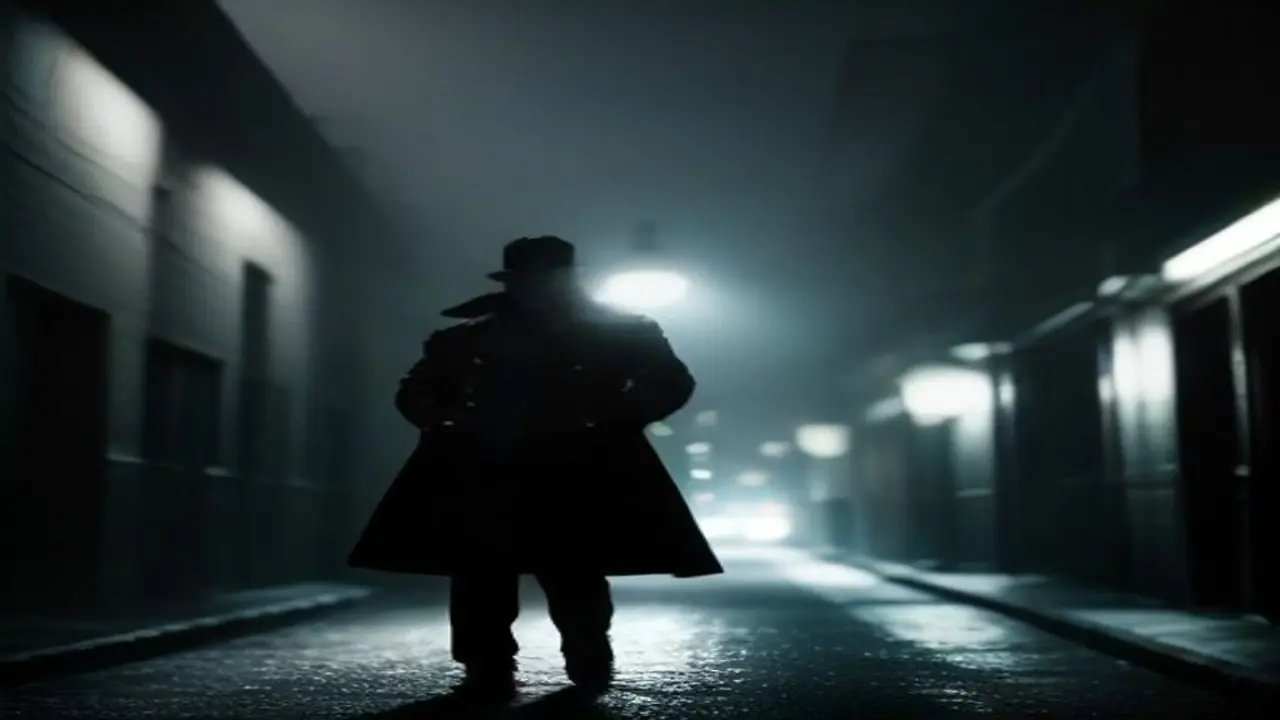
"Low-angle medium close-up of a detective in a fedora leaning across a steel table in a windowless interrogation room, 1947, harsh single overhead bulb casting the eyes into shadow and lighting only the lower face and hands, cigarette smoke drifting through the beam, high-contrast monochrome, 35mm lens, shallow depth of field, tense accusatory mood, grainy black and white film stock"
2. Rainy Alley Meeting
"Wide shot of two figures in trench coats meeting under a flickering sodium streetlamp in a rain-soaked city alley at 2 AM, puddles reflecting the lamp, long shadows down the wet cobblestones, anamorphic 50mm lens with horizontal flare on the lamp, teal and amber color grading, light rain visible in the beam, melancholy and ominous mood, cinematic noir"
3. The Diner at Dawn
"Over-the-shoulder medium shot of a woman in a red dress sitting alone at an empty 1950s diner counter at 4 AM, neon signage glowing cool blue through the front window, soft warm interior lamps on the counter, 85mm lens with shallow focus, mix of warm tungsten and cool neon, hopper-esque atmosphere, lonely and introspective mood, Kodak Portra 400 color palette"
Sci-Fi (3 prompts)
4. Spacecraft Interior at Night Watch
"Wide shot of a lone astronaut in a slightly worn flight suit standing at the panoramic viewport of a corridor on a long-haul spacecraft, soft blue instrument glow from console panels, warm amber emergency lights, Earth visible as a tiny crescent through the window, 24mm wide lens, cinematic sci-fi, contemplative solitude mood, Interstellar-inspired color grading, subtle film grain"
5. Megacity Rooftop
"High-angle wide shot of a rooftop at the top of a megacity tower at twilight, protagonist silhouetted against a horizon of layered skyscrapers with floating billboards and holographic ads, light rain, cyan and magenta neon reflections on wet surfaces, 35mm anamorphic lens, Blade Runner color palette, overwhelming and awe-struck mood, cinematic sci-fi"
6. First Contact
"Low-angle medium shot of a scientist in a hazmat suit standing in a vast glass-walled containment chamber, soft diffused overhead lighting, a strange glowing organism suspended in the center casting cool bioluminescent light on her face, 50mm lens, shallow depth of field, Arrival-inspired atmosphere, wonder and apprehension mood, muted desaturated color grading"
Period Drama (3 prompts)
7. The Letter
"Medium close-up of a young woman in a cream Edwardian high-necked blouse sitting at a small writing desk by a tall window, soft diffused morning light from the window catching the dust in the air, warm wallpaper and oil lamps in the background out of focus, 85mm lens, Vermeer-inspired lighting, Kodak Portra film stock, wistful and tender mood, 1908 setting"
8. The Ballroom
"Wide establishing shot of a 1860s grand ballroom lit by hundreds of candles in chandeliers, couples in formal attire dancing a waltz, warm golden candle glow mixing with cool moonlight through tall windows, 24mm wide lens, slight motion blur suggesting movement, Barry Lyndon inspired cinematography, Kodak 500T, romantic and grand mood"
9. Village Market
"Documentary medium shot of an elderly baker arranging bread loaves on a wooden stall in a 1930s French village market square, early morning soft overcast light, muted earth tones, 35mm lens, documentary cinema style, kind weathered expression on his face, Portra 400 color palette, nostalgic warm mood"
Horror (3 prompts)
10. The Hallway
"Low-angle wide shot looking down a long dimly lit hotel hallway with symmetrical geometric carpet, single flickering fluorescent at the end, deep shadows between doors, cold cyan-green color grading, 24mm lens, The Shining-inspired symmetry, dread and unease mood, grainy 35mm film stock, no figure visible"
11. The Window
"Medium shot from inside a kitchen looking at a woman washing dishes at a window at night, warm interior kitchen light, pitch black outside the window but a barely visible pale face reflected in the lower right corner of the glass, 50mm lens, shallow focus on her hands, slow dawning horror mood, muted color grading with sickly green undertone"
12. The Forest Path
"Low-angle tracking shot following a figure from behind as they walk down a narrow dirt forest path at dusk, dense pine trees crowding the path, cold blue-grey ambient light, a single warm glow visible far in the distance between trees, 35mm lens, slight handheld feel, dense fog creeping across the path, folk horror atmosphere, Hereditary-inspired color palette, mounting dread mood"
Documentary (3 prompts)
13. The Craftsman
"Candid medium close-up of an elderly Japanese woodworker's weathered hands planing a cypress board, warm afternoon window light from the left, workshop blurred in soft background bokeh, 85mm lens, shallow focus on the hands and wood shavings, intimate documentary mood, natural Kodak Portra 400 skin tones, respectful observational cinematography"
14. The Fisherman
"Wide documentary shot of a lone fisherman in oilskins pulling nets at dawn on a small wooden boat off a rocky coast, grey overcast sky, cold blue-green sea, 24mm wide lens, slight handheld camera feel, muted natural color grading, resilient quiet mood, National Geographic style, visible sea spray in the air"
15. Street Life
"Candid street photography wide shot of a chai seller pouring tea into tiny glass cups on a crowded Mumbai sidewalk at golden hour, warm late afternoon sun, blurred motion of passing commuters, 35mm lens, shallow depth of field on the chai seller and his glasses, documentary color grading, lively and warm mood, Portra 800 film stock"
How to Modify These for Your Needs
Each of these prompts is a template. The elements that make them cinematic (shot type, lens, lighting, color grading, mood) are the parts you want to keep. The subject and setting are the parts you swap.
Want a noir prompt but with a different setting? Keep the lens, lighting ratio, and color grading from prompt 1 or 2. Change only the location and subject. The result will still read as noir because the cinematography grammar is intact.
Want to turn any of these into a video prompt? Add duration (6 to 8 seconds), add camera movement (slow push in, static, slight handheld), and add audio direction (ambient, music, dialogue, silence). Then run it through the video generator.
If you need more prompts in a specific genre, the cinematic prompts section expands each of these genres into deeper collections, and the prompt generator can build custom cinematic prompts to your spec.
The Mistake to Avoid
The one trap I see constantly: people add the word "cinematic" to the end of a prompt and nothing else, then wonder why the output looks like a slightly moodier stock photo. Cinematic is the result of the five elements above working together. The word itself is almost noise. Build the stack first. If your prompt would still feel cinematic without the word "cinematic" in it, you have done it right.
Run three or four of the prompts above as-is. Watch what the output looks like when all five elements are in place. Then start writing your own with the same discipline, and your AI images will stop looking like AI images and start looking like frames.