Albert Einstein probably never called compound interest 'the eighth wonder of the world' — the quote is apocryphal. But the reason it stuck is that once you understand how compounding actually works, no other force in finance comes close. This is the piece that finally explains it in real numbers, with three visualizations, the shortcut math every investor should memorise, and a link to a free simulator that lets you watch compounding play out over 40 simulated years in 10 real minutes.
Personal Finance · Updated July 22, 2026Featured
Compound Interest, Explained: Why Starting at 22 Beats Starting at 32 (2026)
The clearest explanation of compound interest you will read this year — with real Indian numbers, three visualizations, the Rule of 72, and a free game that lets you feel the math over 40 simulated years.

11
Min read
1,452
Words
2026
Last updated
Free
Access
TL;DRQuick answer
The clearest explanation of compound interest you will read this year — with real Indian numbers, three visualizations, the Rule of 72, and a free game that lets you feel the math over 40 simulated years.
01Key takeaways
- The Formula (Skip if You Hate Math)
- The Rule of 72 — The Only Shortcut You Need
- The Age 22 vs Age 32 Story (With Real Numbers)
- Why the Last 10 Years Do More Than the First 20
- What Return Rate Is Realistic in India?
Evidence & editorial standards
- Author: Shahrukh — Creator of PromptSpace, AI researcher & prompt engineer since 2024. 159+ articles published.
- Methodology: Claims are based on hands-on testing with live AI models, publicly available benchmarks, and official model documentation.
- Last reviewed: by our editorial team.
- Corrections: Spotted an error? Email [email protected] — we credit reporters.
- Disclosure: PromptSpace publishes original, non-sponsored content. Tools linked are ones we build or personally use.
Keep reading

Personal Finance
The 10 Biggest Financial Mistakes Almost Everyone Makes (And How to Fix Them in 2026)
The ten money mistakes that cost the average Indian ₹50 lakh+ over a lifetime — ranked by damage. Real numbers, real fixes, and a free simulator that lets you see the impact before you make the mistake.

Personal Finance
The Best Financial Literacy Game for Kids, Students & Parents (Free, 2026)
A free browser game that teaches kids (10+), students and working adults how compound interest, SIPs, insurance and emergency funds actually work — by playing. Full walkthrough, teacher-friendly, no signup, plays on any phone or laptop.

Guide
Big Billion Days & Great Indian Festival 2026: The AI Playbook Flipkart Doesn't Want You To Read (Save ₹15k+ In One Sale)
Last year I lost an iPhone 15 deal by 47 seconds because I couldn't decide between blue and green. This is the AI-prep playbook I built after that — a 14-day timeline for Flipkart Big Billion Days and Amazon Great Indian Festival 2026, five sale-day prompts, and the six sneaky tricks retailers use to inflate discount headlines.
Guide
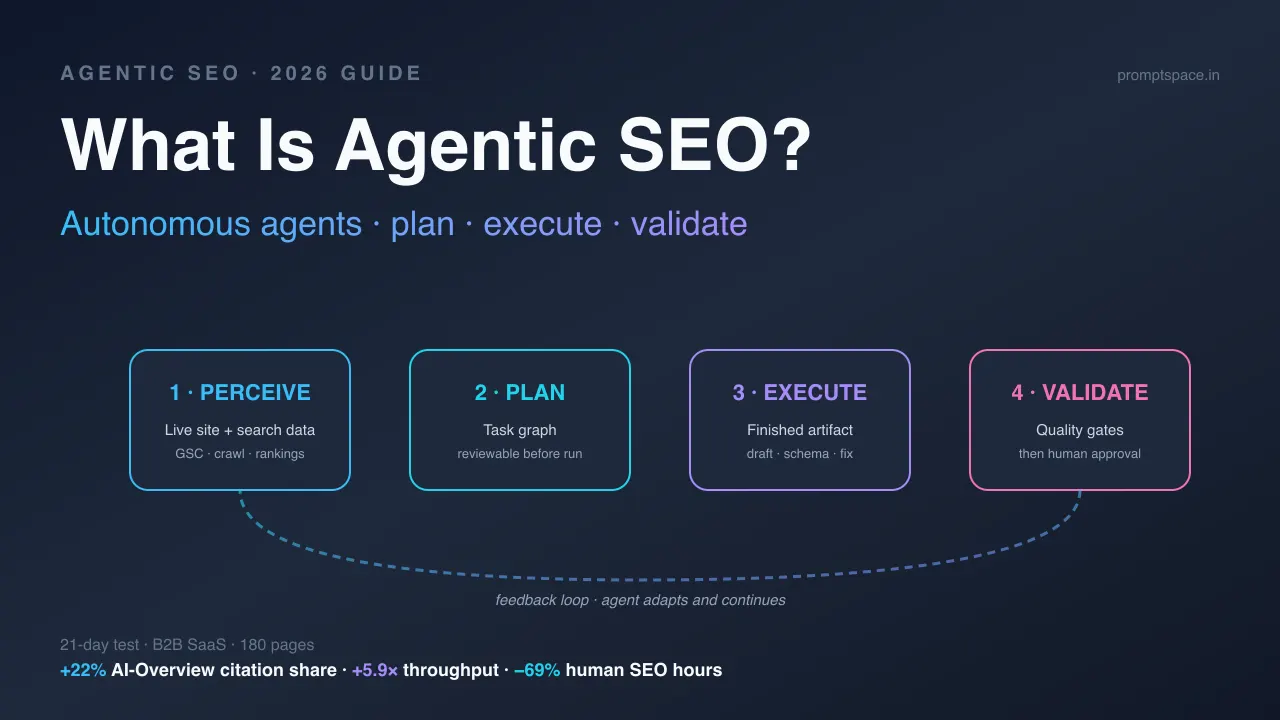
What Is Agentic SEO? The Complete 2026 Guide
Agentic SEO: autonomous AI agents plan, execute & validate SEO work. The four-stage loop, 5 real agent briefs, 21-day test numbers, 2026 tools.

Guide
I Wasted ₹3,500 Once Because I Shopped Like a Normal Person. Here's the AI Playbook I Wish I'd Had (India, 2026)
I bought a washing machine for ₹28,400. My cousin got the same one three days later for ₹24,900. He used AI. I didn't. This is the exact six-step AI shopping stack I use now — seven copy-paste prompts, real Indian tools, and the honest limits nobody sells you.

AI for Business
The Deep Research Stack Bain Won't Publish: Chaining Perplexity, Glean & Claude for Consulting-Grade Output (2026)
MBB firms hire aggressively for it but won't publish it: the deep research agent workflow that chains Perplexity, Glean, Claude Projects, and NotebookLM to produce consulting-grade due diligence in 25 minutes. Real prompts, real ROI math, no hype.
Explore more articles
View all →
Tutorial
How to Change Emotions in Photos Using PromptSpace Pro

Collection
10 Google Gemini Prompts for Luxury Lifestyle Photos

Prompts
Image Prompts: 40 Copy-Paste Prompts for Midjourney, FLUX & DALL-E (2026)
Guide
AI Headshot Prompts for Resume & Job Applications (2026 Guide)

Comparison
Text-to-Video AI: Runway Gen-4 vs Kling 2.5 vs Free Generators (2026 Comparison)
AI Models
GPT-6 Astra: Features, Pricing, Context Window and API Guide