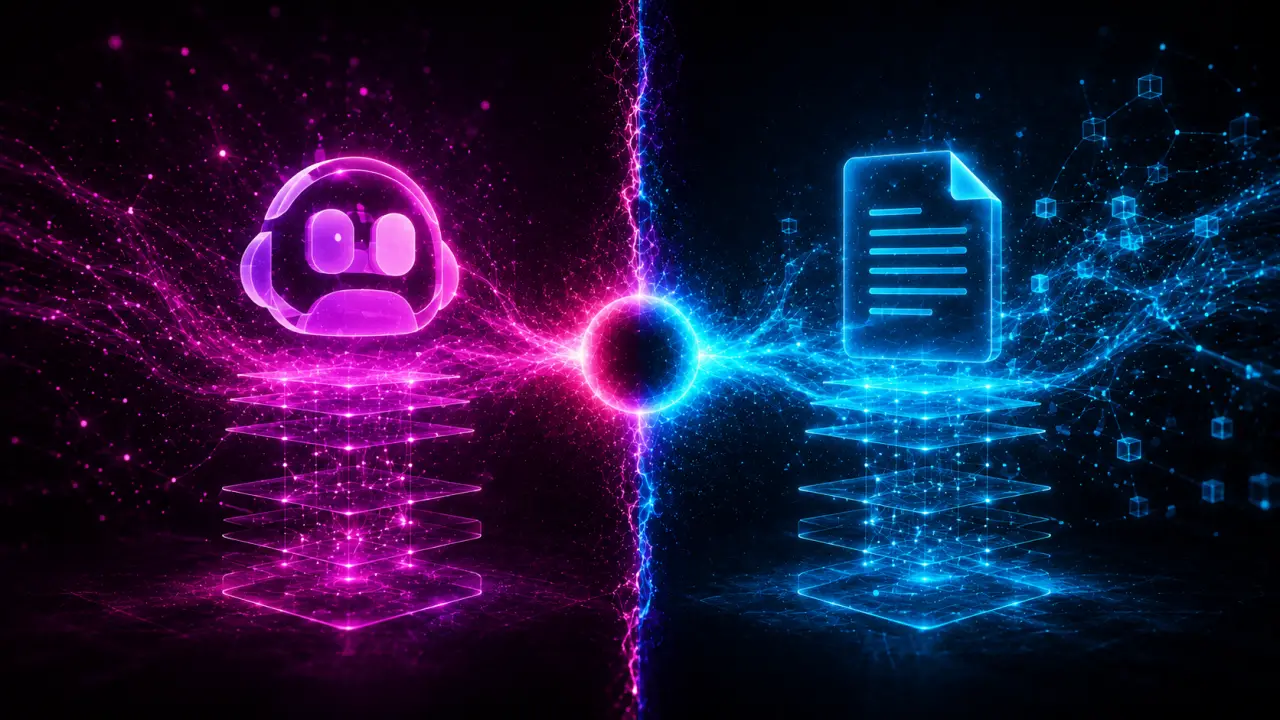
Two concepts keep coming up in the AI coding agent ecosystem: Agent Skills (SKILL.md) and MCP (Model Context Protocol). They sound similar, and developers often confuse them, but they serve fundamentally different purposes. Understanding the difference helps you use both effectively to build smarter, more capable AI agents.
Quick Answer
Agent Skills (SKILL.md) define 'what an agent knows how to do' through workflows and procedures, operating at the instruction layer. MCP (Model Context Protocol) defines 'what an agent can access' via external tools and data sources like APIs, operating at the tool layer.The short version
MCP operates at the tool layer. It gives agents access to external tools and data sources: APIs, databases, file systems, third-party services. Skills operate at the instruction layer. They tell agents how to do something: workflows, checklists, procedures, domain knowledge. MCP answers "what can the agent access?" Skills answer "what does the agent know how to do?"Understanding Agent Skills: The Instruction Layer
Agent Skills are essentially the agent’s internal knowledge and operational procedures. Think of Skills as a set of instructions or recipes that guide the agent on how to perform specific tasks. For example, a Skill could be a step-by-step guide for booking a flight, analyzing customer feedback, or generating marketing copy. In practical terms, Skills are often documented in a SKILL.md file that outlines workflows, expected inputs and outputs, and any domain-specific knowledge required.Practical Example of Agent Skills
Imagine you have an AI agent designed to help with customer support. The agent’s Skill might include a workflow to troubleshoot common connectivity issues: first ask about the device type, then check for network status, and finally suggest a reset procedure if needed. This Skill guides the agent on how to interact and what steps to follow to resolve the customer's problem effectively.Understanding MCP: The Tool Layer
The Model Context Protocol (MCP) enables agents to connect with external tools and data sources. It’s like giving the agent a toolbox filled with APIs, databases, and services that it can call upon to perform tasks beyond its internal capabilities. MCP defines how these external resources are described, accessed, and integrated into the agent’s workflow, allowing for dynamic data retrieval and action execution.Practical Example of MCP
Continuing with the customer support agent example, MCP would allow the agent to access the company's CRM API to retrieve customer account details, check order status via a logistics API, or fetch product manuals from a document database. Without MCP, the agent's knowledge would be limited to what’s embedded internally; with MCP, it can pull live information and take actions in real-time.Why Both Matter: Complementary Roles
Agent Skills and MCP are not competing technologies; they complement each other. Skills define the "how" — the step-by-step logic and decision-making an agent follows. MCP defines the "what" — the external resources and tools the agent can reach out to. Together, they enable agents to act intelligently and interact effectively with the world around them.Step-by-Step: How to Use Both in Your AI Agent
1. Define the Agent’s Skills: Start by outlining the key workflows, procedures, or domain knowledge your agent needs. Document these clearly in SKILL.md or equivalent formats. 2. Identify Required External Resources: Determine what APIs, databases, or third-party services the agent needs access to achieve its goals. 3. Implement MCP Descriptions: Use MCP to describe and connect those external tools and data sources, defining input/output schemas and authentication. 4. Integrate MCP with Skills: Update your Skills to include steps that call on MCP-connected tools where external data or actions are necessary. 5. Test and Iterate: Validate that the agent follows its Skills correctly and successfully interacts with external resources through MCP.Real-World Use Case: AI in E-commerce
Consider an AI shopping assistant designed to help users find products, check availability, and place orders. Its Skills might include greeting customers, understanding product preferences, and handling checkout workflows. MCP would connect it to inventory APIs, payment gateways, and recommendation engines. The combination allows the agent to guide users through a personalized shopping experience and complete transactions seamlessly.Tips for Developers
- Keep Skills Modular: Break down complex tasks into smaller Skills for easier maintenance and updates. - Design MCP for Flexibility: Use standardized formats and protocols in MCP to enable easy swapping or addition of external tools. - Document Thoroughly: Clear documentation of both Skills and MCP schemas helps your team and others understand and extend your agent’s capabilities. - Monitor Usage: Track which Skills and MCP tools are used most to prioritize improvements or scaling.Final Thoughts
Agent Skills and MCP are foundational components in building powerful AI agents. Skills equip agents with the knowledge and procedures to act intelligently, while MCP connects them to the external world of data and services. By leveraging both thoughtfully, developers can create agents that are not only smart but also highly versatile and effective in real-world applications.Frequently Asked Questions
Is the content on this page free to use? Yes — all resources on PromptSpace are completely free. Try our free AI image generator or browse 4,000+ AI prompts at no cost.How do I get started with AI tools? Start with a clear goal and specific prompts. The more detail you provide — audience, format, tone, constraints — the better the AI output.
Can I use AI outputs commercially? On paid tiers of major platforms, yes. Always verify the specific tool's terms of service for your use case.
Where can I find more AI resources? PromptSpace has 4,000+ free AI prompts and 150+ free tools — browse the library or try the AI image generator.