The people creating stunning AI art aren't using better tools than you. They're using better prompts. Here's the structure they follow - and why it works across every AI image generator.
Prompt Engineering Guide: How to Write AI Image Prompts That Actually Work The frustration: You see amazing AI-generated images online. You try the same tool. Your results look... wrong. Blurry faces. Weird hands. Flat lighting. Generic backgrounds.
The truth: Those creators aren't using better AI. They're using better prompts.
Prompt engineering isn't magic - it's a skill. And like any skill, it follows principles you can learn.
This guide breaks down the science of writing AI image prompts that work. Whether you're using PromptSpace Pro, Midjourney, DALL-E, or ChatGPT, these principles apply.
What is Prompt Engineering?
Prompt engineering is the practice of writing text instructions that get AI to generate exactly what you want.Think of it like this:
- Bad prompt: "Draw a dog" → Generic, unpredictable result
- Good prompt: "Professional pet photography of a golden retriever, soft natural lighting, shallow depth of field, 85mm lens, blurred garden background, warm color grading" → Specific, controllable result
The difference isn't the AI. It's the information you give it.
The Anatomy of a Perfect Image Prompt
Every effective image prompt contains these elements:[Subject] + [Setting] + [Lighting] + [Style] + [Technical] + [Quality]
Let's break down each component.
1. Subject (What)
The most important part. Be specific.❌ Weak: "A car" ✅ Strong: "2024 silver Tesla Model 3, clean and polished, three-quarter front view"
What to include:
- Object name and type
- Colors and materials
- Condition (new, weathered, polished)
- View angle (front, side, overhead, close-up)
- Size relationships (if multiple objects)
Example modifiers:
- "Vintage leather handbag with brass hardware"
- "Freshly poured espresso with crema"
- "Modern glass skyscraper reflecting sunset"
2. Setting (Where)
Context transforms a generic image into a story.❌ Weak: "Coffee cup" ✅ Strong: "Coffee cup on rustic wooden farmhouse table, morning sunlight streaming through nearby window, cozy kitchen background"
Setting types:
- Studio: Clean, controlled, professional
- Lifestyle: Real-world context, aspirational
- Environmental: Nature, urban, specific locations
- Abstract: Gradients, patterns, minimal backgrounds
Example settings:
- "On a marble countertop in a luxury bathroom"
- "Floating against a dark gradient background"
- "In a bustling Tokyo street at night"
- "On a weathered wooden dock at sunrise"
3. Lighting (How it looks)
Lighting determines mood more than anything else.Lighting directions:
- Front lighting: Flat, even, commercial
- Side lighting: Dramatic shadows, depth
- Back lighting: Silhouettes, rim light
- Top lighting: Natural midday feel
- Under lighting: Dramatic, unnatural, horror
Lighting qualities:
- "Soft diffused lighting" = Gentle, flattering
- "Hard direct lighting" = Sharp shadows, dramatic
- "Golden hour lighting" = Warm, sunset glow
- "Neon lighting" = Cyberpunk, modern
- "Candlelight" = Intimate, warm
Example lighting descriptions:
- "Soft box studio lighting from 45-degree angle"
- "Dramatic Rembrandt lighting with deep shadows"
- "Overcast diffused natural light"
- "Neon pink and blue cyberpunk lighting"
4. Style (The aesthetic)
Style references give the AI instant direction.Photography styles:
- Portrait, landscape, macro, street, documentary
- Fashion, product, food, architectural
- Film noir, vintage, retro, modern
Art styles:
- Oil painting, watercolor, pencil sketch
- Digital art, 3D render, vector illustration
- Anime, comic book, pixel art
Brand/era references:
- "Apple-style minimalism"
- "1980s retro aesthetic"
- "Vogue fashion editorial"
- "National Geographic documentary"
Example style cues:
- "Cinematic movie still, film grain, anamorphic lens"
- "Instagram lifestyle photography, warm tones"
- "Professional corporate headshot, LinkedIn style"
- "Fantasy concept art, Dungeons & Dragons style"
5. Technical Specifications
Photography terms improve realism and control.Camera/lens:
- "35mm lens" = Wide, environmental
- "50mm lens" = Natural perspective
- "85mm lens" = Flattering portraits
- "100mm macro lens" = Extreme detail
- "Fisheye lens" = Distorted, creative
Aperture (f-stop):
- "f/1.8" = Very shallow depth of field
- "f/8" = Deep depth of field, everything sharp
- "f/16" = Maximum sharpness for landscapes
Other technical terms:
- "ISO 100" = Clean, low noise
- "Shutter speed 1/1000" = Freeze motion
- "Long exposure" = Motion blur, light trails
6. Quality Markers
End with quality signals for better rendering.Resolution/detail:
- "8k resolution"
- "Highly detailed"
- "Photorealistic"
- "Sharp focus"
- "Intricate textures"
Rendering quality:
- "Octane render"
- "Unreal Engine 5"
- "Cinematic quality"
- "Award-winning photography"
Beginner Prompt Formulas
Don't build from scratch. Use these templates.Formula 1: Product Photo
Professional product photo of [product], [surface/material], [lighting description], [photography style], [technical specs], [quality markers]Example:
Professional product photo of wireless earbuds on light gray marble surface, soft box lighting from left creating gentle shadows, Apple-style product photography, 85mm lens f/1.8, 8k detail, photorealistic
Formula 2: Portrait
[Portrait type] of [subject description], [background setting], [lighting], [photography style], [technical], [mood/emotion]Example:
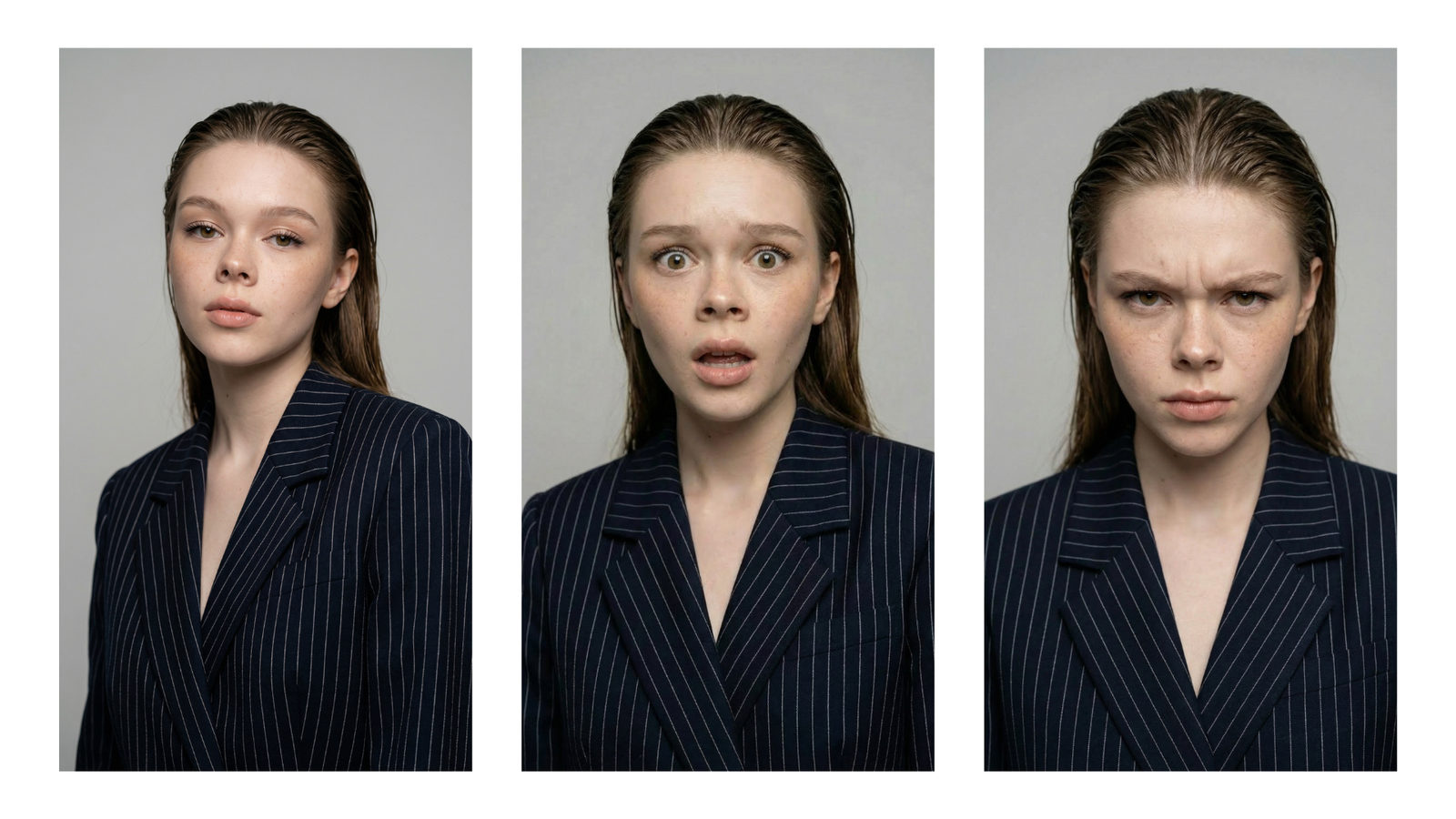
Professional headshot of a confident businesswoman in her 30s, neutral gray studio background, soft lighting with catchlights, corporate photography style, 85mm lens f/1.8, approachable expression
Formula 3: Lifestyle Scene
Lifestyle photo of [subject] [action] in [setting], [time of day] lighting, [atmosphere], [photography style], [quality]Example:
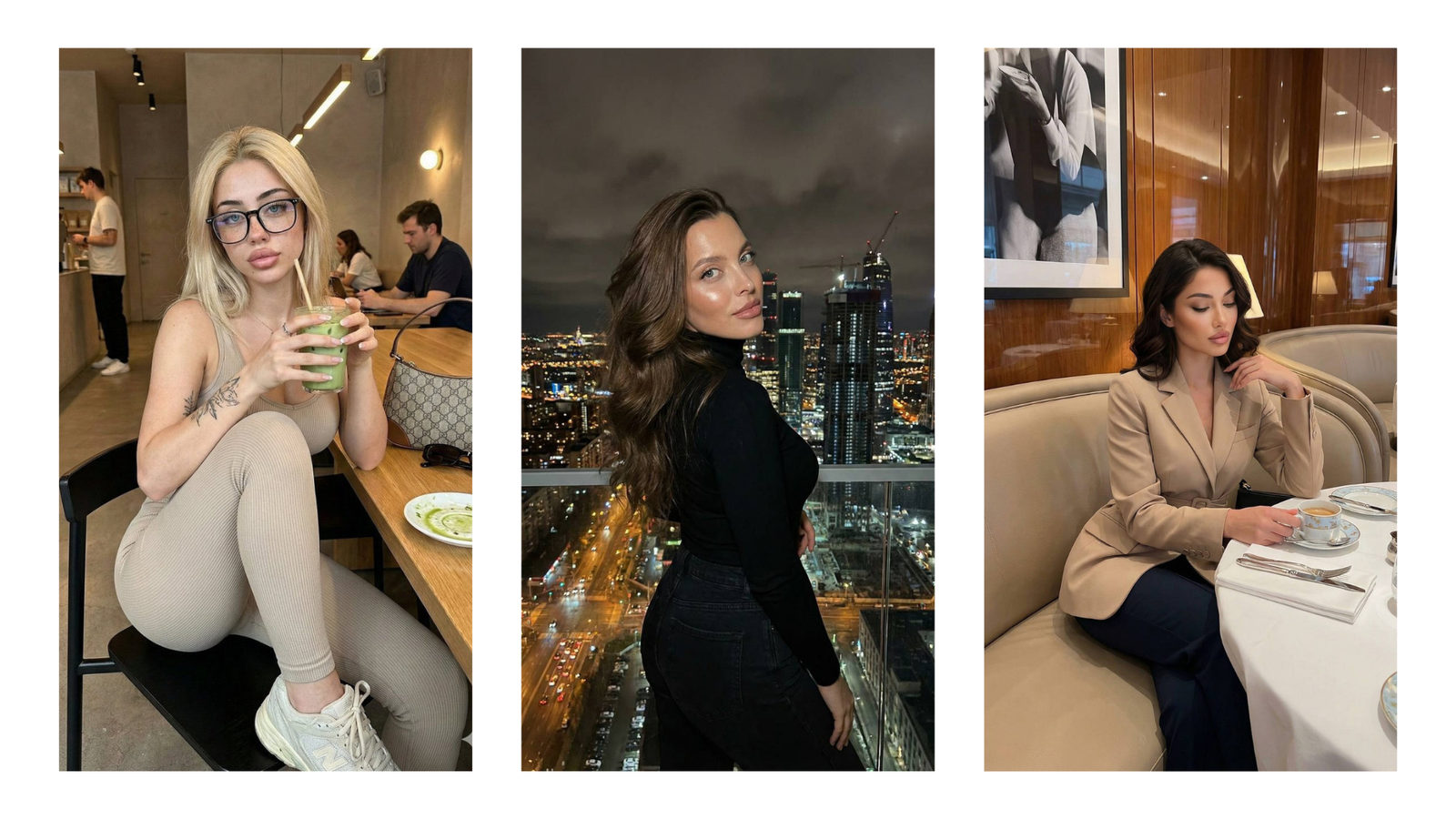
Lifestyle photo of a person reading a book in a cozy reading nook, afternoon window light, warm and peaceful atmosphere, Instagram lifestyle photography, 8k detail
Formula 4: Creative/Artistic
[Art style] of [subject], [color palette], [lighting], [mood], [technical style], [quality markers]Example:
Digital art of a futuristic cityscape, neon purple and cyan color palette, dramatic volumetric lighting, cyberpunk mood, Octane render style, highly detailed, 8k
Technique 1: Negative Prompting
Tell the AI what NOT to include.Format: Add after main prompt:
... [main prompt] ... Avoid: blurry, low quality, distorted, ugly, deformed
Or for specific tools:
- Midjourney: Add --no blur, distortion, text
- PromptSpace Pro: Say "without any text or watermarks"
Technique 2: Weighted Emphasis
Emphasize important elements.In most tools:
- Use parentheses for emphasis: ((sharp focus))
- Or repetition: professional, professional quality, highly professional
Technique 3: Camera Angles & Composition
Control how the image is framed.Angles:
- "Eye-level shot" = Natural, neutral
- "Low angle shot" = Powerful, heroic
- "High angle shot" = Vulnerable, overview
- "Dutch angle" = Dynamic, unsettling
Composition:
- "Rule of thirds" = Balanced, professional
- "Centered composition" = Symmetrical, formal
- "Leading lines" = Guides eye through image
- "Frame within frame" = Layers, depth
Technique 4: Reference Existing Work
Mention artists, brands, or specific works.Photographers:
- "Annie Leibovitz style portrait"
- "Ansel Adams style landscape"
- "Terry Richardson style flash photography"
Artists:
- "In the style of Van Gogh"
- "Studio Ghibli aesthetic"
- "Art Deco design"
Movies/Shows:
- "Blade Runner 2049 cinematography"
- "Wes Anderson color palette"
- "Game of Thrones aesthetic"
Technique 1: Multi-Subject Control
Managing multiple elements in one image.Structure:
[Scene description] featuring [subject 1] [doing what] and [subject 2] [doing what], [spatial relationship], [lighting], [style]
Example:
Professional photo of a business meeting featuring a woman presenting at a whiteboard and three colleagues seated at a conference table, spacious modern office, natural window lighting, corporate photography style
Technique 2: Sequential Refinement (NanoBanana Pro)
Don't try to get perfect in one shot. Build iteratively.Step 1: Generate base
Portrait of a professional woman, studio background
Step 2: Add detail
Add soft lighting from the left side, create gentle shadows
Step 3: Refine
Make the background a warm gray, add subtle rim lighting
Step 4: Polish
Add a slight smile, make the eyes more expressive
Technique 3: Character Consistency
Create the same character across multiple images.Method:
- Create detailed character description
- Save it as a template
- Reuse with different scenarios
Character template:
Sarah: 32 years old, athletic build, shoulder-length brown hair, warm smile, professional but casual style
Usage:
- "Sarah working on laptop in coffee shop..."
- "Sarah giving presentation in modern office..."
- "Sarah hiking on mountain trail..."
Technique 4: Aspect Ratio Control
Different platforms need different sizes.Common ratios:
- 1:1 = Instagram posts
- 4:5 = Instagram portraits
- 16:9 = YouTube thumbnails, widescreen
- 9:16 = Instagram Stories, TikTok
- 21:9 = Cinematic ultrawide
In prompts:
- Midjourney: Add --ar 16:9
- PromptSpace Pro: Say "wide cinematic composition" or "vertical portrait format"
- ChatGPT/DALL-E: Mention "landscape orientation" or "portrait orientation"
Mistake 1: Too Vague
❌ Wrong: "A nice photo of food" ✅ Right: "Appetizing food photography of a gourmet burger, melting cheese, steam rising, professional restaurant lighting, macro detail, warm color grading"Mistake 2: Conflicting Instructions
❌ Wrong: "Dark photo with bright sunlight" (contradiction) ✅ Right: "Dramatic low-key photo with single strong light source creating deep shadows"Mistake 3: Ignoring Composition
❌ Wrong: "A person in a room" ✅ Right: "Portrait using rule of thirds, subject positioned at left intersection point, blurred background creating depth"Mistake 4: Forgetting Scale
❌ Wrong: "A building" (could be any size) ✅ Right: "Low angle shot looking up at a 50-story skyscraper, emphasizing height and scale"Mistake 5: Overloading
❌ Wrong: "A beautiful sunset over mountains with a lake and trees and a cabin and birds flying and a person fishing and clouds..." (too many elements) ✅ Right: "Serene mountain lake at sunset, golden light reflecting on water, silhouetted pine trees, peaceful atmosphere"NanoBanana Pro
- Use natural language conversationally- Iterate in steps - don't try to get perfect in one prompt
- Reference specific brands for instant style
- Character consistency is a strength - use it
Midjourney
- Use parameters: --ar, --v, --style, --stylize- Shorter prompts often work better
- Style references work exceptionally well
- Use /describe to learn from existing images
ChatGPT (DALL-E 3)
- Very detailed prompts work well- Can handle complex scenes with multiple elements
- Good at following specific instructions
- Use "in the style of [artist/brand]" for direction
Stable Diffusion
- More technical - learn about checkpoints and LoRAs- Negative prompts are crucial
- CFG scale affects how literally it follows prompts
- Sampling methods matter (Euler, DPM++, etc.)
By Use Case
- Product photography- Portraits/headshots
- Social media content
- Marketing materials
- Creative projects
By Style
- Professional/corporate- Casual/lifestyle
- Artistic/creative
- Minimal/clean
- Bold/dramatic
By Platform
- Instagram (1:1, 4:5)- YouTube (16:9 thumbnails)
- LinkedIn (professional)
- Website headers (wide)
- Print (high resolution)
Tool recommendation: Save prompts in a note-taking app (Notion, Obsidian) or use a dedicated prompt library like promptspace.in.
Exercise 1: Subject Variation
Write 5 prompts for the same object (coffee mug) with different contexts:- Product photo for Amazon
- Lifestyle Instagram post
- Artistic still life
- Cozy morning scene
- Office desk setting
Exercise 2: Lighting Study
Write the same scene with 5 different lighting setups:- Golden hour
- Studio soft box
- Neon night
- Overcast natural
- Candlelight
Exercise 3: Style Translation
Take a simple subject and write it in 5 different styles:- Photorealistic
- Oil painting
- Anime
- 1980s retro
- Cyberpunk digital art
The Bottom Line
Prompt engineering is the difference between AI-generated junk and professional-quality images.Remember the formula:
Subject + Setting + Lighting + Style + Technical + Quality
Start simple: Master the basics before adding complexity
Iterate: Don't expect perfection on the first try
Save what works: Build your personal prompt library
Study others: Analyze prompts from images you admire
The best AI image creators aren't luckier than you. They're more systematic. They understand that great outputs require great inputs.
Now go write some prompts.
Share this article:
Copy linkXFacebookLinkedIn
Frequently Asked Questions
Is this free to use? Yes — PromptSpace provides free AI prompts for any AI tool. Try them instantly with our free AI image generator — no account needed.Which AI model works best with these prompts? These prompts work across Midjourney, DALL-E 3, FLUX, and Stable Diffusion. Test in two tools to compare — results vary by model.
Can I use AI-generated images commercially? Yes on paid tiers of Midjourney, ChatGPT Plus, and Adobe Firefly. Always verify the specific platform's terms before commercial use.
How do I improve results if the first output isn't right? Add specific lighting, camera angle, and visual style references. Iterate 3–4 times with small changes to find the best output. Once you can write prompts from scratch, the next skill is reverse-engineering prompts from a reference image. Our image-to-prompt tools guide ranks the 8 best free tools and covers the manual workflow for closing the final 20% of fidelity.