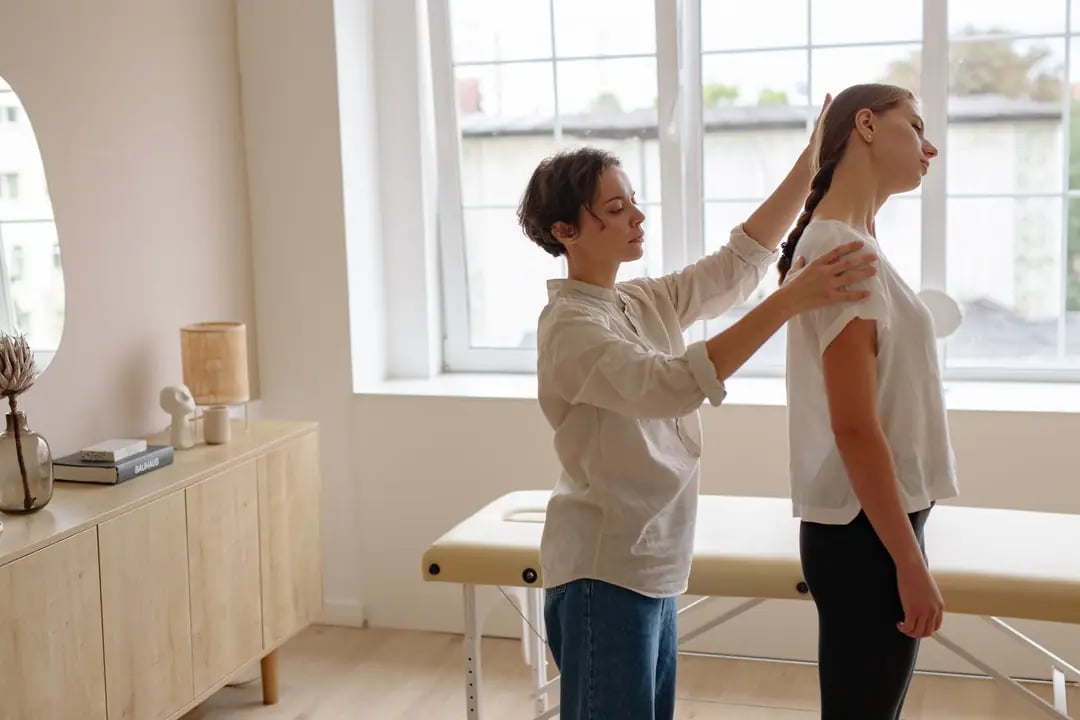
A solo chiropractor in Nashville tripled her new-patient conversions in Q2 — not by increasing ad spend, but from four AI tools that answered patient inquiries within 30 seconds, personalized care-plan emails, and generated Google-review responses automatically. Her cost-per-new-patient dropped from $187 to $54, and she saved roughly 11 hours a week she used to spend on documentation. If you run a chiropractic practice in 2026, the tools below are the ones actually moving production, retention, and time-off-your-plate.
Table of Contents
- What Chiropractors Actually Automate With AI in 2026
- HIPAA + State Board Rules Before You Adopt AI
- Best AI Tools for Patient Intake & Scheduling
- Best AI Tools for SOAP Notes & Documentation
- Best AI Tools for Patient Communication & Retention
- Best AI Tools for Practice Marketing
- Best AI Tools for Insurance Verification
- How Solo vs Multi-Doctor Practices Should Choose
- Honest Limitations
- FAQs
What Chiropractors Actually Automate With AI in 2026
Every DC we've talked to who's actually shipped AI into their practice — not just experimented — has automated the same five buckets. Nothing exotic. All measurable in dollars and hours.
- Patient intake: Auto-responding to web forms, missed calls, and Instagram DMs within 30 seconds. Speed-to-lead is the single biggest predictor of whether a prospect books. Practices using AI response bots convert 2–3× more inbound inquiries than practices relying on end-of-day callbacks.
- SOAP notes: Ambient AI scribes listen to the adjustment or exam and generate a compliant SOAP note in 30–90 seconds. A 40-patient day used to mean 90 minutes of documentation after close. It's now 15.
- Care plans & patient education: Personalized email sequences that reinforce the treatment plan, home-care exercises, and re-exam reminders. Retention through visit 12 is where practice production is actually made.
- Marketing: Google Business Profile posts, review responses, Facebook/Instagram ad copy, and testimonial-based landing pages generated in minutes, not weeks.
- Insurance verification & appeals: Automated benefits checks, CPT code assistance, and first-draft appeal letters. This is where cash flow lives or dies.
The pattern: AI is best at the repetitive language work between clinical decisions — not the clinical decisions themselves.
HIPAA + State Board Rules Before You Adopt AI
Before you paste a single patient note into ChatGPT, understand what you're signing up for. Under HIPAA, any vendor that touches protected health information (PHI) on your behalf is a Business Associate and must sign a Business Associate Agreement (BAA). No BAA, no PHI. Period.
- Consumer ChatGPT, Gemini, and Claude do NOT come with a BAA. Using them with patient names, DOBs, diagnosis codes, or identifiable case details is a HIPAA violation waiting to happen.
- ChatGPT Enterprise, ChatGPT Team, Google Workspace, and Microsoft 365 Copilot do offer BAAs for eligible healthcare customers — but you have to request and execute one. The default account is not BAA-covered.
- Purpose-built medical AI tools (Freed, Nabla, Suki, DeepScribe, Klara, Weave) include BAAs as standard for their clinical tiers.
- State chiropractic board rules vary widely on AI marketing and telehealth. Several boards (CA, TX, NY, FL) have issued 2025–2026 guidance requiring that AI-generated patient communications be reviewed by the licensed DC before sending, and that AI cannot be represented as delivering clinical advice.
Consult the HHS HIPAA guidance for small covered entities and your state board's most recent bulletin before rollout. When in doubt: de-identify inputs, and never paste PHI into a non-BAA tool.
Best AI Tools for Patient Intake & Scheduling
The math here is simple: if you take 40 web inquiries per month and convert 12, moving that to 24 is roughly $40K–$80K in annual production depending on your case average. Speed-to-lead does that. Research from InsideSales has repeatedly shown that responding to a lead within 5 minutes is 21× more likely to qualify the prospect than responding at 30 minutes. In chiropractic, where patients are actively shopping (often when they can't sleep or can't work), 30-second AI response is the new baseline.
- Weave AI — Chiropractic-friendly VoIP + text platform with AI missed-call text-back, AI review requests, and appointment reminders. HIPAA BAA included. ~$399–$599/mo depending on features. Best for practices already using Weave phones. Weave also integrates natively with ChiroTouch, Genesis, and several other chiro PMs.
- Klara — Secure patient messaging with AI-assisted triage and auto-responses. HIPAA BAA. ~$250–$450/mo. Strong for practices doing a lot of two-way patient texting and multi-language patient bases.
- Kareo (Tebra) AI — Integrated PM/EHR with AI-powered scheduling and reminders. Pricing bundled with the PM subscription (typically $150–$300/provider/mo). Best if you already run Tebra/Kareo.
- ChatGPT Team + custom GPT — Build a custom auto-responder trained on your intake FAQ, insurance list, and pricing. ~$30/user/mo. Requires BAA request and de-identified use. Best for practices with a technical staff member who can wire it into a form or chat widget. Combine with a Zapier or Make.com workflow to auto-post responses to email, Instagram DM, and Facebook Messenger from one prompt library.
Implementation reality: The tool matters less than the trigger. Whichever platform you pick, the first thing to automate is the missed call and the form fill — those two channels are where most practices leak the majority of their inquiries.
Best AI Tools for SOAP Notes & Documentation
Ambient scribes are the single biggest time-saver in a modern chiropractic office. Real 2026 pricing below — check the vendor for current promos.
- Freed AI — ~$99/mo per clinician. Very popular with solo DCs and small practices. Fast, clean SOAP output, chiropractic templates available. BAA included. Weakness: less deep EHR integration than clinical-enterprise tools.
- Nabla Copilot — ~$119/mo per clinician. Strong ambient capture, multi-language, growing chiropractic template library. BAA included.
- Suki AI — ~$399/mo per clinician. Enterprise-grade voice assistant with deeper EHR integration (Epic, Athena, etc.). BAA included. Overkill for solo DCs; good for 5+ provider groups.
- DeepScribe — Custom pricing, typically $300–$600/mo per clinician. Highly accurate ambient scribe with specialty tuning. BAA included. Best for multi-provider groups wanting near-zero after-hours charting.
All four will draft SOAP notes, but none of them should be trusted with CPT/ICD-10 coding without review. Hallucinated codes are the single most common failure mode. Always have the DC or a certified biller verify the code line.
Best AI Tools for Patient Communication & Retention
Retention math: a patient who completes 24 visits at a $65 average visit generates $1,560. Losing them at visit 6 costs you $1,170. AI retention tools pay for themselves in one saved care plan per month.
- Weave — AI-powered recall texts, birthday campaigns, review requests, and two-way messaging. BAA included. ~$399–$599/mo.
- Podium — Best-in-class review generation and AI text automation. BAA available. ~$399/mo starting. Strong for practices where Google reviews drive most new patients.
- Solutionreach — Chiropractic-friendly patient engagement suite with AI recall and reactivation campaigns. BAA included. ~$329–$599/mo.
- ChatGPT Team for custom nurture sequences — Draft a 12-visit care-plan email series, reactivation letters for inactive patients, and post-adjustment home-care tips. ~$30/user/mo. Requires BAA-covered account and de-identified inputs.
Best AI Tools for Practice Marketing
Chiropractic marketing in 2026 is dominated by Google Business Profile, Instagram, and hyper-local Facebook ads. AI collapses the content workload from a weekly bottleneck into a 20-minute Monday morning ritual.
- ChatGPT Team for Google Business Profile — Generate 4 posts per week (patient education, offers, testimonials), rewrite them for Facebook/Instagram, and draft review replies in your practice voice. ~$30/user/mo. Save the top 10 outputs into a custom GPT so quality compounds.
- Testimonial reply generation — Feed the review text into a custom GPT with your reply style guide. Reduces reply time from 8 minutes to 30 seconds and improves response rate — a documented Google ranking signal.
- Facebook/Instagram ad drafting — Use ChatGPT or Claude to generate 10 headline + primary text variants per campaign. Standard workflow: describe your offer, target avatar, and prior top-performing ad; generate; A/B test 3 in Meta Ads Manager. Practices in the $50–$100 CAC range typically see cost-per-lead drop 20–35% after moving from single-variant to AI-assisted multi-variant testing.
- Canva Magic Studio — AI-driven ad creative, patient education carousels, and reactivation flyers. ~$15/mo. Pair with your brand kit and one signature color; visual consistency is what makes local ads recognizable at the fifth impression.
- Video reels — Tools like Opus Clip and CapCut's AI editor can convert a 20-minute patient education video into 12 short-form clips with captions in under 15 minutes. This is the single fastest way to build local Instagram reach in 2026.
One caveat worth repeating: if your state board restricts AI-generated testimonials or patient stories, do not generate fake reviews or fabricate case results. Use AI to reply to real reviews and to write educational content — never to invent patient outcomes.
Best AI Tools for Insurance Verification
Insurance is where a lot of practices leak money. AI shortens verification and materially improves appeal success rates.
- pVerify AI — Automated real-time insurance verification with AI-driven benefits parsing (chiropractic visit limits, deductible status, in-network status). ~$0.35–$1.50 per verification depending on volume. BAA included. Payback is typically 1–2 verifications saved per week.
- ChiroTouch AI — Chiropractic-specific PM/EHR with built-in AI billing assistance, claim scrubbing, and payer analytics. Pricing typically $199–$499/provider/mo. BAA included.
- ChatGPT Team for insurance appeal drafting — Feed a denial reason, patient plan of care (de-identified), and relevant clinical rationale. Generate a first-draft appeal letter citing standard chiropractic medical necessity language. Human review required. ~$30/user/mo.
Comparison Table: 6 AI Tools for Chiropractors (2026)
| Tool | Cost (USD/mo) | Best For Practice Size | EHR/PMS Integration | HIPAA BAA | Chiro-Specific Accuracy |
|---|---|---|---|---|---|
| Freed AI | ~$99/clinician | Solo & 2–4 provider | Copy-paste; light integrations | Yes | Strong on SOAP; verify CPT/ICD |
| Nabla Copilot | ~$119/clinician | Solo & small groups | Copy-paste + some EHR hooks | Yes | Strong on SOAP; multi-language |
| Weave AI | ~$399–$599 | Solo & multi-doc | Chiro PM integrations (ChiroTouch, Genesis) | Yes | Excellent for recall/reviews |
| ChiroTouch AI | ~$199–$499/provider | Solo & multi-doc | Native (it's a PM/EHR) | Yes | Purpose-built for chiro |
| pVerify AI | ~$0.35–$1.50/verify | Any practice with insurance | API into most PM systems | Yes | Excellent on chiro benefits parsing |
| ChatGPT Team | ~$30/user | Any (with BAA + de-ID) | Manual / API | Yes (Enterprise/Team BAA on request) | General; requires prompts & review |
How Solo vs Multi-Doctor Practices Should Choose
Don't buy the whole stack on day one. Layer it based on volume and pain.
- Solo DC, under 100 visits/week: Start with Freed AI ($99) for SOAP notes and ChatGPT Team ($30) for marketing + intake auto-responses. Total ~$129/mo. Add Weave or Podium when your review pipeline becomes the bottleneck.
- Solo DC, 100–200 visits/week: Add Weave AI ($399–$599) for missed-call text-back and recall. Add pVerify for insurance. Total ~$700–$900/mo. ROI usually clears in the first month.
- 2–5 provider practice: Standardize on ChiroTouch AI or an equivalent chiro-native PM, plus Freed/Nabla per provider for notes, plus Weave for front-office comms. Expect $1,500–$3,000/mo all-in.
- 5+ provider group: Evaluate Suki or DeepScribe for enterprise ambient scribing, keep a chiro-native PM, and add a dedicated marketing tool stack. Expect $4,000–$8,000+/mo.
Rule of thumb: any AI tool that saves one hour of DC time per week or generates one additional new patient per month is paying for itself.
Honest Limitations
- Hallucinated CPT and ICD-10 codes. Every ambient scribe will occasionally suggest a code that isn't supported by the documented findings. Always verify — this is a compliance and audit issue, not just a billing one.
- Consumer AI + PHI = HIPAA violation. Free ChatGPT, free Gemini, free Claude are not BAA-covered. Do not paste patient identifiers, even for "just a quick draft."
- State board rules on AI marketing. Several state boards prohibit AI-generated testimonials, AI-authored patient advice, or unsupervised AI communications. Check your board bulletin — the American Chiropractic Association maintains a helpful state-level resource hub.
- Telemedicine limits. AI cannot substitute for a licensed DC's clinical judgment or replace the in-person adjustment. Any AI-generated "advice" must be reviewed and issued under a licensed clinician's authority.
- Voice recognition errors during adjustments. Ambient scribes struggle when the DC is behind the patient, using percussion instruments, or in a noisy adjusting room. Test in your actual environment before committing.
💡 Pro Tip #1: Build one "practice voice" custom GPT for all marketing content. Feed it your top-performing emails, your Google reviews, and 3 blog posts you've written. Every future output sounds like you, not like ChatGPT.
💡 Pro Tip #2: For SOAP notes, spend one afternoon writing 5 gold-standard notes yourself, then paste them into your scribe's custom template. Accuracy jumps 20–30% versus the default template.
🧠 Did You Know? Practices that respond to Google reviews within 24 hours see roughly 12% higher review volume over the following six months — Google's algorithm rewards engagement, and AI review responders make same-day replies trivial.
⚠️ Warning — HIPAA BAA is not optional: If your AI vendor cannot produce a signed Business Associate Agreement, they cannot legally process PHI on your behalf. Fines under the HIPAA Enforcement Rule range from $137 to $68,928 per violation, capped at $2,067,813 per identical violation type per year (2026 adjusted amounts). Get the BAA in writing before you upload a single patient chart.
Frequently Asked Questions
Can I use ChatGPT for patient records?
Not the free version, and not the personal Plus plan. Only ChatGPT Enterprise or ChatGPT Team accounts with a signed BAA from OpenAI can legally process PHI. Even then, best practice is to de-identify inputs whenever possible.
Which AI is HIPAA-compliant for a solo chiropractic practice?
Freed AI, Nabla, Weave, Klara, and ChiroTouch AI all include HIPAA BAAs as standard. For general-purpose AI, ChatGPT Team or Enterprise (with BAA executed) is the most common solo-practice choice.
How do I stop AI from hallucinating CPT codes?
Three steps: (1) never let the AI submit codes directly — always route through a human reviewer; (2) give the AI your approved CPT/ICD-10 list as reference context; (3) use a chiropractic-specific tool like ChiroTouch AI where the code library is native rather than inferred.
Is Freed AI worth the cost?
For a solo DC seeing 25+ patients per day, yes — the time savings usually clear the $99/mo fee within the first week. For very low-volume practices (under 40 visits/week), you may be fine with a manual template.
What is the best AI SOAP note tool for chiropractors?
Solo and small practices: Freed AI or Nabla. Multi-provider groups: DeepScribe or Suki. All four are BAA-covered. Whichever you pick, spend one afternoon customizing the chiropractic template.
Do I need to disclose to patients that I'm using AI?
Best practice — and increasingly required by state boards — yes. A short notice in your intake paperwork stating "We use HIPAA-compliant AI tools to assist with documentation and communication" is standard in 2026.
Can AI verify insurance benefits automatically?
Yes. pVerify AI, Availity, and most modern chiropractic PMs offer real-time or near-real-time benefits verification. Solo practices typically save 5–8 staff hours per week.
Will AI replace front-desk staff?
No — it changes the role. Front-desk staff shift from answering the same 20 questions to handling exceptions, patient experience, and revenue tasks. Practices we've talked to don't cut headcount; they redeploy it.
What's the ROI I should expect from AI in year one?
Realistic numbers for a solo practice adding AI scribing + intake automation + review generation: 8–12 hours/week saved, 15–30% more new patients converted, and $30K–$90K additional annual production. Multi-doc practices scale from there.
Are there free AI tools that are safe to use?
Only for non-PHI tasks. Free ChatGPT is fine for generating a Google Business Profile post about "5 stretches for desk workers" — never for anything involving a specific patient.
Ready-to-Use Prompts for Chiropractic Practices
PromptSpace maintains a curated library of tested prompts for healthcare providers, including chiropractic-specific templates for new-patient intake, care-plan emails, Google review responses, insurance appeal letters, and Google Business Profile posts. All prompts are structured for HIPAA-aware use (de-identified inputs) and written in a professional clinical voice.
Start here: Browse healthcare prompts on PromptSpace →
Related reads: ChatGPT Prompts for Financial Advisors (2026) · ChatGPT Prompts for Insurance Agents (2026) · Full prompt library
Further Reading
- American Chiropractic Association (ACA) — state-level guidance and chiropractic technology updates.
- HHS.gov — HIPAA guidance for small covered entities.
- Chiropractic Economics — practice management and technology reporting.
This guide is educational and does not constitute legal, compliance, or clinical advice. Verify current pricing, BAA availability, and your state board's most recent AI guidance before adopting any tool. Author: PromptSpace editorial team.